Product Description
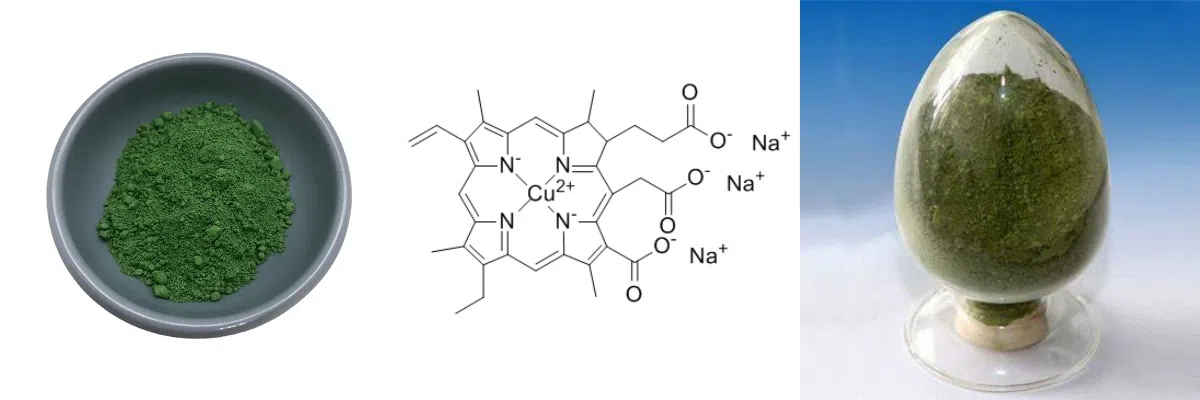
Sodium copper chlorophyllin is a high-value semi-synthetic natural pigment derived from natural green leafy plant raw materials, including silkworm excrement, clover, alfalfa and bamboo leaves. The raw materials are extracted with organic solvents such as acetone, methanol, ethanol and petroleum ether. In the production process, the central magnesium ion of natural chlorophyll is replaced by copper ion, and then alkaline saponification is carried out to remove methyl and phytol groups, which are converted into carboxyl groups and finally processed into disodium salt. Classified as a semi-synthetic pigment, it shares similar structural characteristics and production processes with homologous products including sodium iron chlorophyllin and sodium zinc chlorophyllin.
Core Chemical Properties
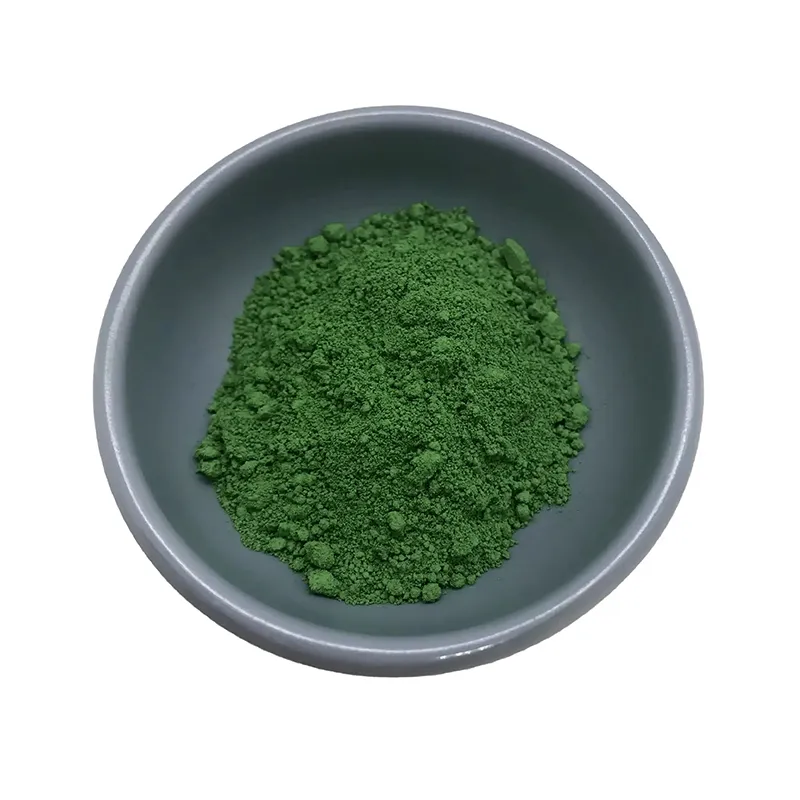
Sodium copper chlorophyllin is a dark green to black solid with stable physical and chemical properties. Its core property parameters are as follows: the melting point is higher than 300°C; it is slightly soluble in DMSO and very slightly soluble in methanol, and has good water solubility. For safe storage, the product needs to be placed in a dark, inert environment and stored at a low temperature of 2-8°C. Its estimated LogP value is 2.170. In terms of occupational exposure limits, the ACGIH TWA limit is 1 mg/m³, and the NIOSH IDLH limit is 100 mg/m³ with a TWA limit of 1 mg/m³. In addition, the product has complete industry certification and coding qualifications, including WGK Germany level 2 rating, RTECS number GS2168866, TSCA certification qualification, and HS code 32129000. The toxicological test data shows that the intraperitoneal LD50 of mice is 190mg/kg.
| Melting point | >300°C |
| storage temp. | Keep in dark place,Inert atmosphere,2-8°C |
| solubility | DMSO (Slightly), Methanol (Very Slightly) |
| form | Solid |
| color | Dark Green to Black |
| Water Solubility | Soluble in water. |
| Exposure limits | ACGIH: TWA 1 mg/m3 |
| NIOSH: IDLH 100 mg/m3; TWA 1 mg/m3 | |
| LogP | 2.170 (est) |
| EPA Substance Registry System | Cuprate(3-), [(7S,8S)-3-carboxy-5-(carboxymethyl)-13-ethenyl-18-ethyl-7,8-dihydro-2,8,12,17-tetramethyl-21H,23H-porphine-7-propanoato(5-)-.kappa.N21,.kappa.N22,.kappa.N23,.kappa.N24]-, trisodium, (SP-4-2)- (11006-34-1) |
Safety Information
| Risk Statements | 62 |
| Safety Statements | 22-24/25 |
| WGK Germany | 2 |
| RTECS | GS2168866 |
| TSCA | Yes |
| HS Code | 32129000 |
| Toxicity | mouse,LD50,intraperitoneal,190mg/kg (190mg/kg),Journal of the American Pharmaceutical Association, Scientific Edition. Vol. 43, Pg. 722, 1954. |
Product Applications
Sodium copper chlorophyllin boasts outstanding antioxidant and bioactive properties, supporting multiple health-related applications:
Liver protection: It delivers strong antioxidant capacity to shield liver cells against free radicals and oxidative stress, lowering liver load. It can also activate hepatic reticuloendothelial cells, facilitate liver function recovery and boost liver cell resistance.
Improvement of leukopenia and anemia: Leukopenia arises from complicated triggers. Sodium copper chlorophyllin offers broad-spectrum benefits for this condition. Available clinical data shows its effective rate reaches 80% or higher.
Support for ulcer and wound healing: This ingredient can be quickly absorbed in human bodies, speed up cell metabolism, and bring notable benefits for tissue repair and wound recovery.
Anti-mutagenic property: It suppresses the activity of mutagens including benzopyrene. It also raises cell viability, strengthens macrophage phagocytosis, and improves the body’s defense against mutagenic damage.