

Product Description
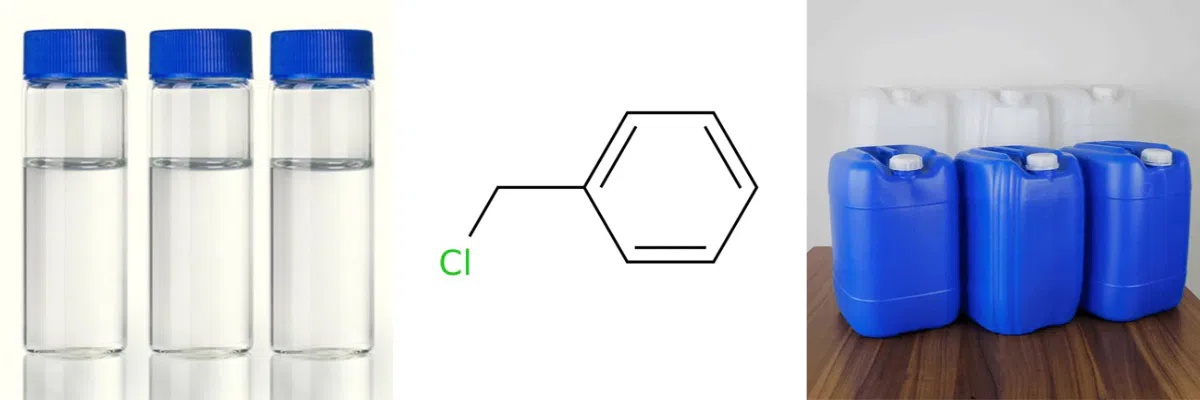
Benzyl Chloride, CAS 100-44-7, is an aromatic organochlorine compound with the molecular formula C₇H₇Cl. Its structure consists of a benzene ring attached to a chloromethyl group, which gives the compound its characteristic reactivity in organic synthesis.
The chlorine atom is attached to the benzylic carbon rather than directly to the aromatic ring. This structural feature distinguishes benzyl chloride from chlorobenzene and makes it suitable for selected substitution and benzylation reactions in the production of organic intermediates. It is therefore an important starting material in several industrial chemical manufacturing processes.
Benzyl chloride is used in the production of benzyl alcohol, selected dye intermediates, pharmaceutical-related intermediates, plasticizer-related chemicals, and other benzyl derivatives. The final product obtained depends on the downstream reaction route and process design; benzyl chloride itself should not be confused with these derivatives.
The material is typically a colorless to slightly yellow liquid with a pungent, irritating odor. It is only slightly soluble in water and can react or decompose under certain conditions involving moisture. Product quality and stability may be affected by storage conditions, contamination, and the condition of the container.
Benzyl chloride presents significant health hazards and requires strict industrial controls. It is a strong irritant and is classified by the International Agency for Research on Cancer (IARC) as carcinogenic to humans. Handling should be restricted to appropriately trained personnel using suitable closed systems, ventilation, protective equipment, and the controls specified in the current Safety Data Sheet (SDS). Buyers should verify the purity, stabilizer status where applicable, impurity limits, packaging compatibility, and transport requirements before procurement.
Chemical Properties
| Property | Details |
|---|---|
| Product Name | Benzyl Chloride |
| CAS Number | 100-44-7 |
| EC Number | 202-853-6 |
| Molecular Formula | C₇H₇Cl |
| Molecular Structure | C₆H₅CH₂Cl |
| Molecular Weight | 126.58 g/mol |
| IUPAC Name | (Chloromethyl)benzene |
| Common Synonyms | Chloromethylbenzene; α-Chlorotoluene; Chlorophenylmethane |
| Chemical Class | Aromatic organochlorine compound |
| Appearance | Colorless to slightly yellow liquid |
| Odor | Pungent, irritating odor |
| Melting Point | Approximately −39°C |
| Boiling Point | Approximately 179°C at atmospheric pressure |
| Density | Approximately 1.10 g/cm³ at 20°C |
| Water Solubility | Slightly soluble; reported values vary with temperature and test conditions |
| Main Chemical Reactivity | Reactive benzylic chloride group used in selected organic synthesis reactions |
| Storage | Store in a tightly closed, chemically compatible container under the conditions specified in the supplier's SDS; protect against incompatible materials and moisture |
| Safety Consideration | Toxic and strongly irritating; carcinogenicity classification and required controls must be reviewed before handling |
Physical-property values are typical reference data and may vary slightly by source, purity, and measurement conditions. Consult the product-specific TDS, COA, and SDS for commercial specifications and safe-handling requirements.
Product Applications
1. Manufacture of Benzyl Alcohol
Benzyl chloride is used as a starting material in industrial routes for producing benzyl alcohol. The appropriate process and quality controls depend on the manufacturing method and required product purity.
2. Dye and Colorant Intermediates
It serves as a building block for selected organic intermediates used in dye and colorant manufacture. Suitability depends on the target compound and the impurity requirements of the downstream process.
3. Pharmaceutical-Related Chemical Intermediates
Benzyl chloride is used in the synthesis of certain pharmaceutical-related intermediates and specialty organic compounds. Its use is subject to process-specific controls and the applicable quality and regulatory requirements.
4. Plasticizer and Specialty Chemical Production
Selected industrial processes use benzyl chloride to manufacture benzyl-containing intermediates, including certain plasticizer-related chemicals. The exact application depends on the downstream chemistry and intended product specification.
5. General Organic Chemical Manufacturing
Benzyl chloride is used in selected benzylation and substitution reactions to introduce benzyl functionality into organic molecules. These applications are carried out in controlled industrial or laboratory settings with appropriate exposure and process-safety controls.
FAQ
Q1: What is Benzyl Chloride?
A: Benzyl chloride is an aromatic organochlorine compound with the formula C₇H₇Cl. It is primarily used as an intermediate in organic chemical manufacturing.
Q2: What is the CAS number and molecular weight of Benzyl Chloride?
A: Its CAS number is 100-44-7, and its molecular weight is approximately 126.58 g/mol.
Q3: Is Benzyl Chloride the same as Chlorobenzene?
A: No. In benzyl chloride, chlorine is attached to the benzylic carbon in the –CH₂Cl group. In chlorobenzene, chlorine is attached directly to the aromatic ring. They are different chemicals with different reactivity.
Q4: What is Benzyl Chloride used for?
A: It is used as an intermediate in the production of benzyl alcohol, selected dye and pharmaceutical-related intermediates, plasticizer-related chemicals, and other organic compounds.
Q5: What safety precautions are required for Benzyl Chloride?
A: Benzyl chloride presents serious health hazards, including carcinogenicity concerns and strong irritation. It should be handled only by trained personnel using suitable engineering controls and protective equipment, in accordance with the current SDS and applicable regulations.


