

Product Description
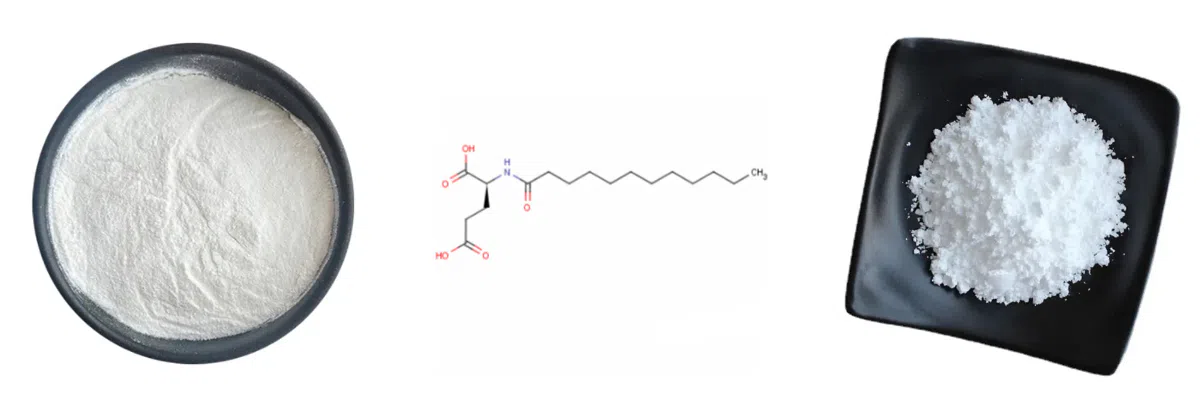
N-Lauroyl-L-glutamic Acid, identified by CAS number 3397-65-7, is an N-acyl derivative of L-glutamic acid. Its molecular formula is C₁₇H₃₁NO₅, and its molecular weight is approximately 329.43 g/mol. The molecule contains a 12-carbon lauroyl chain attached through an amide bond to the amino group of L-glutamic acid, while two carboxylic acid groups remain available for acid–base interactions.
This combination of structural features gives the compound both hydrophobic and polar characteristics. The lauroyl chain contributes affinity for oily or nonpolar components, while the carboxyl groups influence ionization and interactions with water and other formulation ingredients. These characteristics are relevant when evaluating the material for personal care ingredient development, particularly in systems where pH and neutralization affect ingredient behavior.
The free acid should be distinguished from salts such as sodium or potassium lauroyl glutamate. These materials have different chemical forms and may exhibit different solubility, processing behavior, and formulation performance. Neutralization conditions, the selected counterion, and the surrounding ingredient system can all affect the behavior of a formulation containing this compound.
In product development, N-Lauroyl-L-glutamic Acid may be investigated as a functional ingredient or as a starting material for related formulation components, depending on the intended process. Its suitability for a specific cleanser, skin care product, or other daily chemical formulation should be established through solubility assessment, pH evaluation, compatibility testing, and finished-formula performance trials.
For procurement, the key distinction is whether the required material is the free acid or a specified derivative. Buyers should also confirm the assay, physical form, impurity profile, and any application-specific quality requirements before incorporating it into a commercial formulation.
Chemical Properties
| Property | Details |
|---|---|
| Product Name | N-Lauroyl-L-glutamic Acid |
| CAS Number | 3397-65-7 |
| Common Name | Lauroyl Glutamic Acid |
| Chemical Name | L-Glutamic Acid, N-(1-oxododecyl)- |
| IUPAC Name | (2S)-2-(Dodecanoylamino)pentanedioic acid |
| Molecular Formula | C₁₇H₃₁NO₅ |
| Molecular Weight | Approximately 329.43 g/mol |
| Chemical Class | N-acyl amino acid |
| Structural Features | C12 lauroyl chain, one amide linkage, and two carboxylic acid groups |
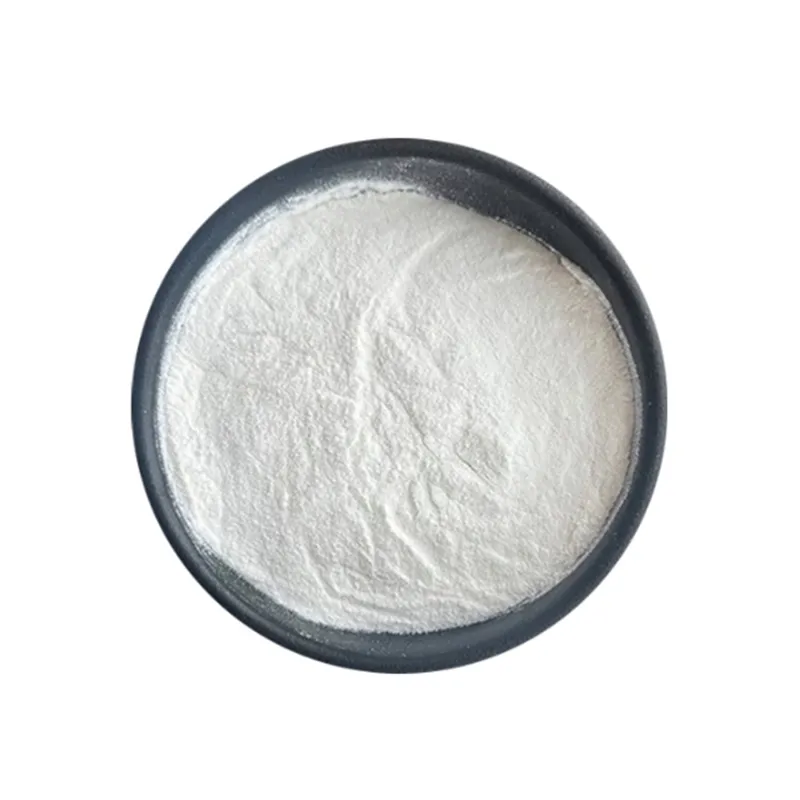
| Appearance | Commonly reported as a white to off-white solid; confirm the supplied grade |
| Melting Point | Approximately 95–96°C reported; verify using grade-specific data |
| Solubility Behavior | Limited solubility in water may occur; behavior can change with pH, neutralization, and solvent composition |
| Acid–Base Behavior | Contains two carboxylic acid groups; ionization depends on the solution environment |
| Related Chemical Forms | Sodium and potassium lauroyl glutamate are distinct salt forms, not interchangeable names for the free acid |
| Storage | Use the supplier's product-specific storage conditions and compatible, tightly closed packaging |
Product Applications
1. Personal Care Formulation Development
N-Lauroyl-L-glutamic Acid can be evaluated in the development of personal care ingredients and formulations. Its suitability depends on the intended function, formulation pH, ingredient compatibility, and required product performance.
2. Cleansing System Research
The molecule's long-chain acyl group and polar functional groups make it relevant to research involving amino-acid-based cleansing systems. Formulators should assess its behavior in the complete system, including whether neutralization or conversion to a salt is required.
3. Surfactant-Related Ingredient Development
The compound may be investigated during the development of related surfactant ingredients and formulations. Its free-acid form should be distinguished from the corresponding glutamate salts, which can have different handling and solution properties.
4. Skin Care Ingredient Compatibility Studies
Formulation researchers can evaluate the material's compatibility with oils, aqueous phases, pH modifiers, and other functional ingredients. Stability, texture, and performance should be established in the intended finished formula rather than inferred from structure alone.
5. Chemical Intermediate and Derivative Research
N-Lauroyl-L-glutamic Acid may be used in research involving N-acyl amino acids and the preparation or evaluation of related derivatives. Any subsequent chemical transformation should be selected according to the target structure and validated process requirements.

FAQ
Q1: What is N-Lauroyl-L-glutamic Acid CAS 3397-65-7?
It is an N-acyl derivative of L-glutamic acid with a lauroyl group attached to the amino nitrogen. Its molecular formula is C₁₇H₃₁NO₅.
Q2: What is the molecular weight of N-Lauroyl-L-glutamic Acid?
Its molecular weight is approximately 329.43 g/mol.
Q3: Is N-Lauroyl-L-glutamic Acid the same as Sodium Lauroyl Glutamate?
No. N-Lauroyl-L-glutamic Acid is the free acid, whereas Sodium Lauroyl Glutamate is a sodium salt. Their chemical forms and formulation properties differ.
Q4: What affects its solubility in a formulation?
Solubility can depend on pH, neutralization, solvent composition, temperature, and the presence of other ingredients. Testing under the intended processing conditions is recommended.
Q5: What should buyers confirm before purchasing?
Verify the CAS number, free-acid identity, assay, appearance, impurity profile, and applicable quality requirements. If the material is intended for personal care production, also confirm its suitability for the specific formulation and the requirements of the destination market.


