

Product Description
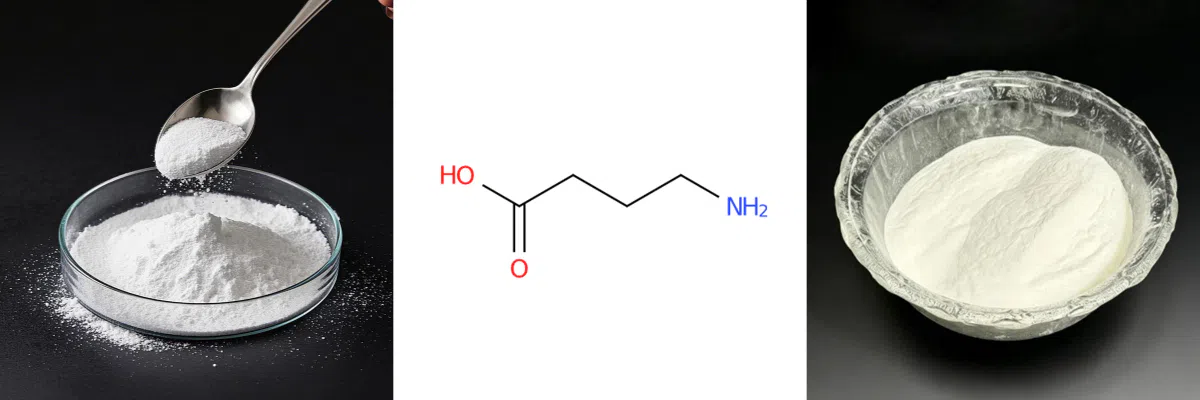
Aminobutyric Acid with CAS number 56-12-2 is Gamma-Aminobutyric Acid (GABA), a naturally occurring non-protein amino acid also known as 4-Aminobutanoic Acid. It has the molecular formula C₄H₉NO₂ and a molecular weight of approximately 103.12 g/mol. The molecule contains both an amino group and a carboxyl group, allowing it to participate in acid–base interactions and biochemical processes.
GABA is found in plants and other living organisms. In plant science, it is investigated for its role in cellular metabolism, signaling, and responses to environmental conditions such as drought, salinity, and temperature changes. These research areas have attracted interest in agricultural chemistry and the development of plant-related formulations. However, practical performance depends on the crop, application method, dosage, environmental conditions, and formulation; specific agronomic outcomes should be validated through appropriate testing.
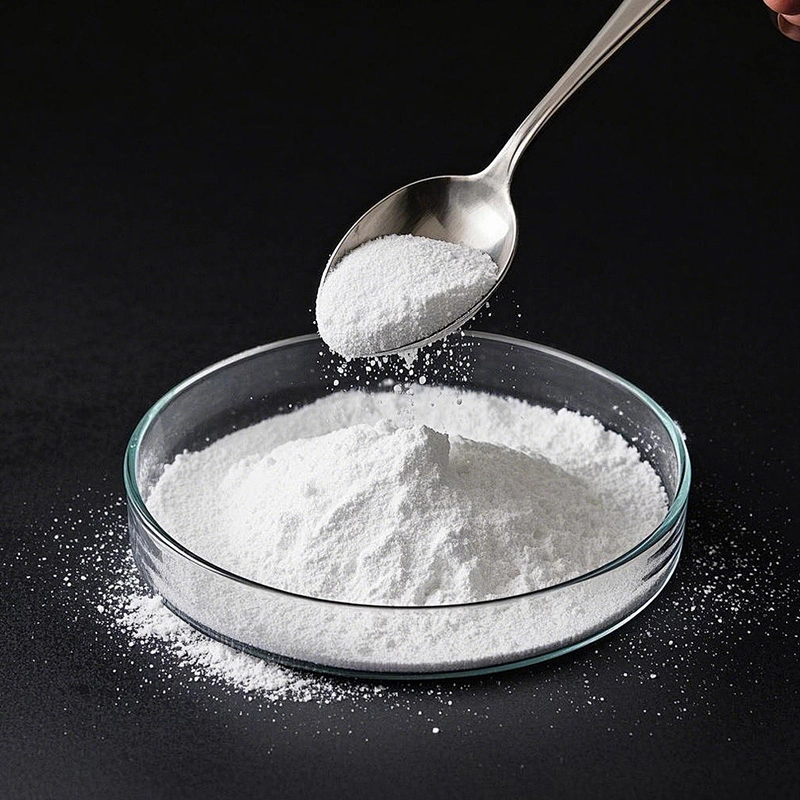
The material is typically supplied as a white to off-white crystalline powder and is highly soluble in water. These properties make it convenient for preparing aqueous test solutions and for use in laboratory research and selected formulation processes. GABA is also relevant to biochemical research and certain food-related applications, where the required grade and applicable regulations must be considered separately.
For agricultural buyers, the key selection factors are the intended use, assay, impurity profile, moisture specification, and compatibility with the planned formulation. The product's CAS identity should be verified carefully to ensure that the material is Gamma-Aminobutyric Acid rather than another aminobutyric acid isomer.
Aminobutyric Acid Chemical Properties
| Property | Details |
|---|---|
| Product Name | Aminobutyric Acid |
| Specific Isomer | Gamma-Aminobutyric Acid (GABA) |
| CAS Number | 56-12-2 |
| Molecular Formula | C₄H₉NO₂ |
| Molecular Weight | 103.12 g/mol |
| IUPAC Name | 4-Aminobutanoic Acid |
| Common Synonyms | GABA; γ-Aminobutyric Acid; 4-Aminobutyric Acid |
| Chemical Class | Gamma-amino acid; non-protein amino acid |
| Appearance | White to off-white crystalline powder |
| Melting Point | Approximately 195–204°C, with decomposition reported |
| Water Solubility | Highly soluble in water |
| Acid Dissociation Constants | Approximately pKa 4.0 for the carboxyl group and 10.5 for the amino group; values depend on measurement conditions |
| Functional Groups | Primary amino group and carboxyl group |
| Storage Recommendation | Keep tightly closed in a cool, dry place; follow the supplier's product-specific SDS and storage instructions |
Property note: GABA can exist as a zwitterion, carrying both positive and negative charges within the same molecule, depending on the solution environment. This acid–base behavior is relevant when preparing solutions or evaluating compatibility with other formulation ingredients. Melting-point results and other specifications can vary by test method and product grade, so the supplier's current TDS and COA should be used for final quality assessment.
Product Applications
1. Agricultural and Plant Physiology Research
GABA is studied in plant metabolism and in biochemical pathways associated with plant responses to environmental stress. It can serve as a research material for investigating plant physiological processes and related agricultural applications.
2. Agrochemical Formulation Development
Because GABA is highly soluble in water, it may be evaluated in aqueous agricultural formulations and experimental mixtures. Formulation stability, compatibility with other ingredients, and performance should be established through testing rather than assumed from solubility alone.
3. Plant Stress-Response Studies
Researchers use GABA to investigate plant responses to conditions such as salinity, water limitation, and temperature stress. Results from laboratory or controlled-environment studies should be assessed separately before making claims about field performance.
4. Biochemical and Laboratory Research
GABA is a useful reference compound for studies involving amino acid metabolism, biochemical signaling, and related analytical procedures. Its defined chemical identity and well-documented physicochemical properties support reproducible experimental work.
5. Food and Specialty Ingredient Applications
GABA is also used in certain food-related and specialty ingredient applications. Buyers considering these uses should confirm the applicable food-grade specification, purity requirements, and regulatory status for the destination market.
FAQ
Q1: What is Aminobutyric Acid CAS 56-12-2?
CAS 56-12-2 identifies Gamma-Aminobutyric Acid, commonly abbreviated as GABA. Its IUPAC name is 4-Aminobutanoic Acid.
Q2: What is the molecular formula of GABA?
Its molecular formula is C₄H₉NO₂, and its molecular weight is approximately 103.12 g/mol.
Q3: Is GABA soluble in water?
Yes. GABA is highly soluble in water, which makes it suitable for preparing aqueous solutions for research and selected formulation-development work.
Q4: Why is GABA relevant to agricultural research?
GABA occurs naturally in plants and is investigated for its role in plant metabolism and responses to environmental stress. Specific effects in crops depend on experimental conditions and should be verified before making agricultural performance claims.
Q5: What should buyers verify before purchasing GABA?
Confirm that the product is the gamma isomer with CAS 56-12-2. Review the assay, moisture content, impurity limits, intended-use grade, packaging, and available quality documents before placing an order.


