

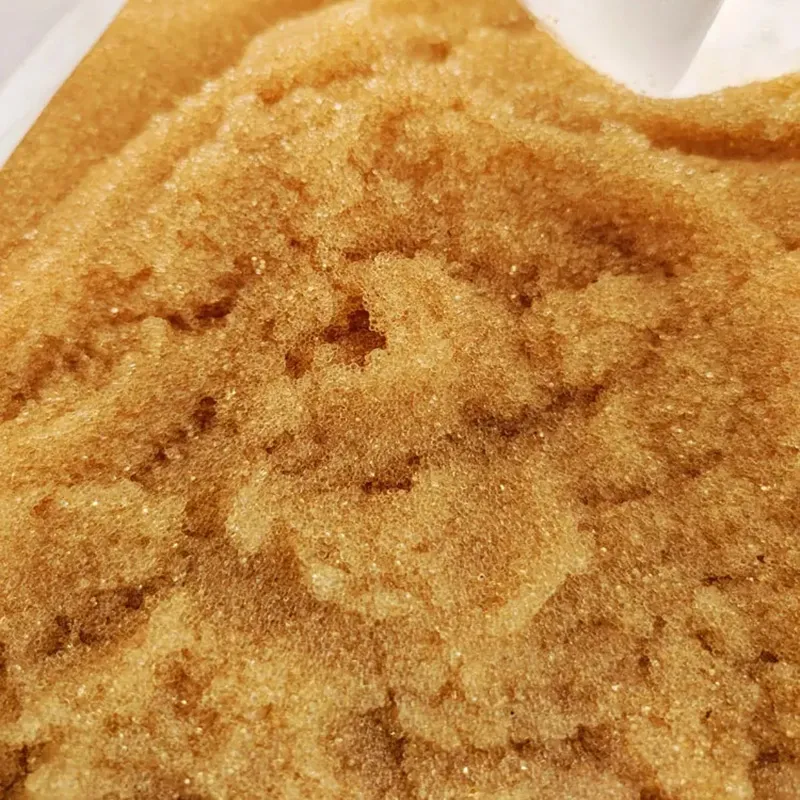
Product Description
IRA-400 Cl is a strongly basic anion exchange resin supplied in the chloride form and identified by CAS number 9002-24-8. It is based on a crosslinked styrene-divinylbenzene polymer matrix with quaternary ammonium functional groups. These positively charged sites attract anions from surrounding solutions and allow them to exchange with the resin's chloride counterions.
During operation, the resin can remove selected anionic species from water or process liquids. Depending on the feed composition and operating conditions, these may include sulfate, nitrate, and other anions. The exchange behavior is influenced by the relative affinity of the resin for different ions, the concentration of competing species, flow rate, contact time, and the condition of the resin bed.
The resin is insoluble in water and is generally supplied as solid beads or granules, although the exact physical form depends on the supplied grade. Its insoluble polymer framework makes it suitable for column-based treatment and other processes in which a solid ion-exchange medium is separated from the treated liquid. The chloride form is particularly relevant where anion removal is required without initially supplying the resin in hydroxide form.
In water-treatment systems, resin performance is assessed through operating capacity, breakthrough behavior, pressure drop, and the quality of the treated stream. Regeneration conditions must be selected according to the target ions and the system design. If the resin is used for a specialized separation, such as recovery of a specific anionic substance, selectivity and recovery efficiency should be established using the actual process solution.
Chemical Properties
| Property | Details |
|---|---|
| Product Name | Strong Base Anion Exchange Resin IRA-400 Cl |
| Common Description | IRA-400 Chloride-Form Anion Exchange Resin |
| CAS Number | 9002-24-8 |
| Polymer Composition | Crosslinked styrene-divinylbenzene resin |
| Functional Group | Quaternary ammonium |
| Resin Type | Strongly basic anion exchange resin |
| Supplied Ionic Form | Chloride (Cl⁻) |
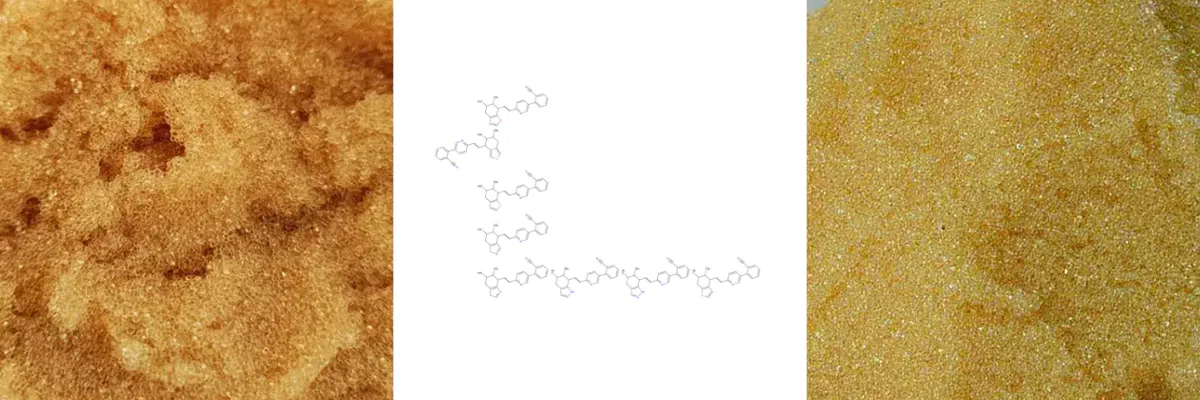
| Molecular Formula Representation | (C₁₂H₁₈NCl)n, as reported in some chemical databases |
| Molecular Weight | Not defined as a single value; the resin is a crosslinked polymer |
| Appearance | Commonly white to pale-yellow solid beads or granules; verify the supplied grade |
| Water Solubility | Insoluble in water |
| Ion-Exchange Mechanism | Exchange of chloride counterions for compatible anions in solution |
| Typical Physical Format | Solid ion-exchange resin |
| Storage | Keep in closed packaging under the supplier's specified conditions; avoid allowing the resin bed to dry out during service or storage if the grade requires moisture retention |
Product Applications
1. Industrial Water Deionization
The resin can be used as the anion-exchange stage in deionization systems to remove negatively charged dissolved species. System performance depends on feed-water composition, pretreatment, and the operating capacity available before breakthrough.
2. Nitrate and Sulfate Removal
In suitable water-treatment systems, the resin can exchange chloride for nitrate, sulfate, and other target anions. Competitive ions in the feed may affect removal efficiency, so treatment design should be based on water analysis and the required effluent limits.
3. Process-Water Purification
IRA-400 Cl may be incorporated into industrial process-water purification trains where anion reduction is required. It is commonly considered alongside other treatment stages selected to address cations, organic matter, suspended solids, and other feed-water constituents.
4. Industrial Wastewater Treatment
The resin can be evaluated for removing selected anionic contaminants from industrial wastewater. The appropriate use depends on contaminant identity, concentration, competing ions, and whether regeneration or spent-resin disposal is practical for the specific waste stream.
5. Chemical Separation and Recovery
Anion exchange can support the separation or recovery of charged substances from process liquids. For a target-specific recovery application, resin selectivity, loading capacity, elution behavior, and regeneration compatibility should be evaluated in trials using the actual process matrix.
FAQ
Q1: What is IRA-400 Cl resin?
It is a strongly basic anion exchange resin supplied in the chloride form. Its quaternary ammonium functional groups enable the exchange of chloride ions for selected anions in solution.
Q2: What does “Cl” mean in the product name?
“Cl” indicates that chloride is the resin's counterion in the supplied ionic form. This distinguishes the chloride form from other ionic forms, such as the hydroxide form.
Q3: Does the resin dissolve in water?
No. The crosslinked polymer matrix is insoluble in water and is used as a solid ion-exchange medium.
Q4: Which ions can this resin remove?
Depending on feed composition and operating conditions, it can exchange chloride for anions such as nitrate and sulfate. Actual removal performance depends on ion selectivity, competing species, contact time, and resin capacity.
Q5: Can the resin be reused?
It may be regenerated and reused in compatible systems. The regeneration method and service life depend on the target ions, operating conditions, fouling, physical integrity, and the required treatment performance.
Q6: Is the chloride form interchangeable with the hydroxide form?
No. The ionic form affects the initial counterion and the process behavior. The appropriate form depends on the treatment objective and system design.


