

Product Description
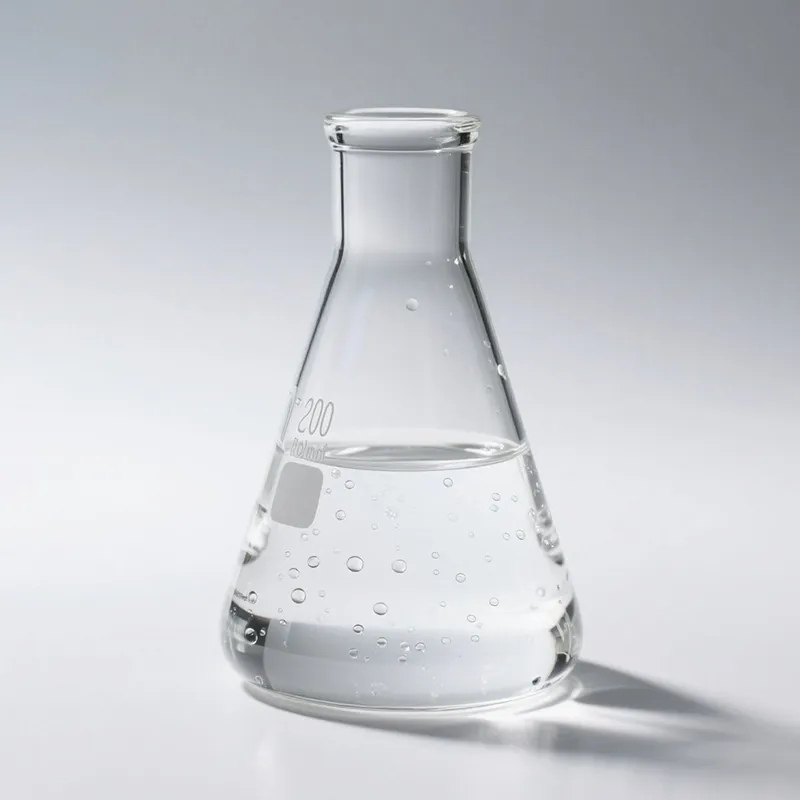
Potassium Methylsiliconate, also known as Potassium Methylsilanetriolate, is an organosilicon potassium salt identified by CAS number 31795-24-1. It is used primarily in surface treatment and formulation chemistry, particularly where water repellency is required on compatible mineral-based materials.
In masonry treatment systems, the material can react with suitable components of a mineral substrate to modify surface behavior and reduce the tendency of liquid water to penetrate. The extent of water repellency depends on the substrate's composition, porosity, alkalinity, moisture condition, and the treatment procedure. It should not be assumed to provide waterproofing against hydrostatic pressure or to replace structural moisture-control measures.
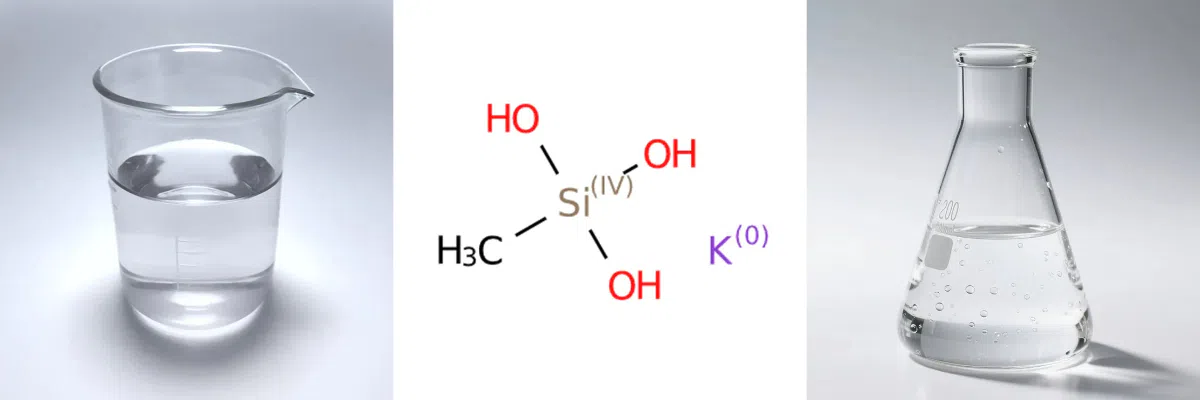
Commercial Potassium Methylsiliconate is commonly supplied as an alkaline aqueous solution. The solution contains reactive silicon species in a potassium-containing medium, so its properties differ from those of an isolated, anhydrous molecular compound. Concentration, density, alkalinity, and appearance should therefore be described according to the actual grade rather than treated as universal values for every product sold under this chemical name.
The material is also used in selected coatings and paint formulations, including systems containing mineral fillers or silicate-based ingredients. Compatibility depends on formulation pH, the other ingredients present, and the order of addition. Small-scale testing can help identify precipitation, viscosity changes, or other signs of incompatibility before production use.
For surface-treatment development, evaluation should focus on water uptake, penetration depth, substrate appearance, and durability under the intended exposure conditions. On masonry, test results from one substrate should not automatically be applied to another, because differences in mineral composition and porosity can substantially affect the final result.
Chemical Properties
| Property | Details |
|---|---|
| Product Name | Potassium Methylsiliconate |
| Common Chemical Name | Potassium Methylsilanetriolate |
| CAS Number | 31795-24-1 |
| Molecular Formula | CH₃K₃O₃Si, as listed in chemical databases |
| Molecular Weight | Approximately 208.41 g/mol for the listed formula |
| EC Number | 250-807-9 |
| Chemical Class | Organosilicon potassium salt |
| Functional Chemistry | Methyl-substituted silicon species in a potassium-containing system |
| Commercial Physical Form | Commonly supplied as an aqueous solution |
| Typical Appearance | Colorless to yellowish liquid for commercial aqueous grades |
| Water Compatibility | Commonly supplied in water-based form |
| Density | Grade-dependent; some aqueous commercial solutions are reported around 1.3–1.4 g/cm³ |
| Primary Function | Water-repellent treatment and surface modification |
| Main Application Substrates | Suitable masonry, mineral surfaces, and selected coating systems |
| Handling Consideration | Alkaline and potentially corrosive; follow the product-specific safety instructions |
Product Applications
1. Masonry and Mineral-Surface Water Repellency
Potassium Methylsiliconate is used in treatment formulations for suitable masonry and mineral substrates. It can help reduce water absorption, with effectiveness influenced by the substrate, concentration, and application method.
2. Concrete and Cement-Based Materials
The material may be evaluated for compatible concrete and cement-based surfaces where reduced liquid-water uptake is desired. Trials should assess changes in absorption and surface appearance without assuming that the treatment will prevent all moisture transmission.
3. Coatings and Paint Formulations
In selected coating systems, Potassium Methylsiliconate can serve as a functional ingredient for surface modification and water-repellent performance. Its compatibility with binders, mineral fillers, and other alkaline ingredients should be established before scale-up.
4. Silicate-Based Building Materials
The compound can be considered in certain formulations containing mineral or silicate components. The formulation should be checked for stability, uniformity, and the intended interaction with the treated substrate.
5. Non-Metal Surface Modification
Potassium Methylsiliconate is used in processes designed to modify the surface properties of non-metallic materials. The choice of substrate and treatment conditions determines whether the desired water-repellent effect can be achieved.
6. Chemical Intermediate and Laboratory Research
It can serve as a starting material or research chemical in selected organosilicon processes. Such use requires consideration of the alkaline aqueous chemistry and the specific reaction conditions involved.
FAQ
Q1: What is Potassium Methylsiliconate?
Potassium Methylsiliconate is an organosilicon potassium salt with CAS number 31795-24-1. It is also known as Potassium Methylsilanetriolate and is used in surface-treatment and formulation applications.
Q2: What is Potassium Methylsiliconate mainly used for?
A major application is water-repellent treatment of suitable masonry and mineral surfaces. It is also used in selected coatings and surface-modification processes.
Q3: Is Potassium Methylsiliconate supplied as a liquid or a solid?
Commercial grades are commonly supplied as aqueous solutions. The concentration and physical properties vary by grade, so the supplied product's specification should identify its actual form.
Q4: Can it make concrete completely waterproof?
It should not be described as providing complete waterproofing. It can help reduce water absorption on suitable substrates, but performance depends on the material and treatment conditions, and it does not replace measures designed to resist hydrostatic pressure or structural water ingress.
Q5: Can Potassium Methylsiliconate be added to any coating?
No. Compatibility depends on the binder, filler, pH, and other formulation components. A preliminary compatibility test is recommended for the intended coating system.
Q6: What safety considerations are important?
Aqueous commercial grades can be strongly alkaline and corrosive. Use suitable chemical-resistant gloves and eye protection, prevent splashes, and follow the safety instructions for the actual supplied concentration.


