

Product Description
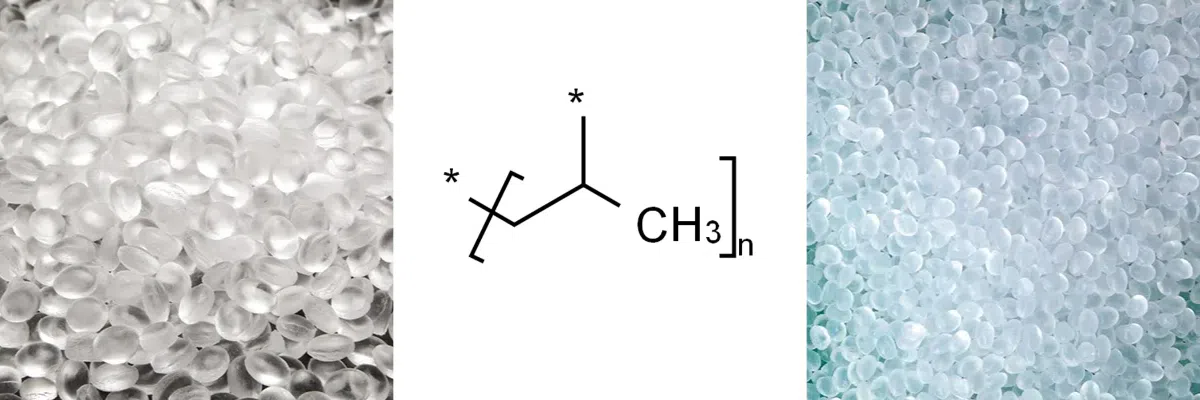
Polypropylene (PP), identified by CAS number 9003-07-0, is a thermoplastic polymer produced through the polymerization of propylene. Its repeating units are commonly represented by the formula (C₃H₆)n. Unlike a small-molecule chemical, polypropylene is a macromolecular material whose molecular weight and processing behavior depend on its chain structure and the grade supplied.
The polymer is widely used in manufacturing because it combines low density with a useful balance of stiffness, chemical resistance, and processability. Its properties can vary considerably with molecular weight, molecular-weight distribution, crystallinity, stereoregularity, and whether the material is a homopolymer or a copolymer. These differences determine how a particular grade performs during molding, extrusion, or fiber production.
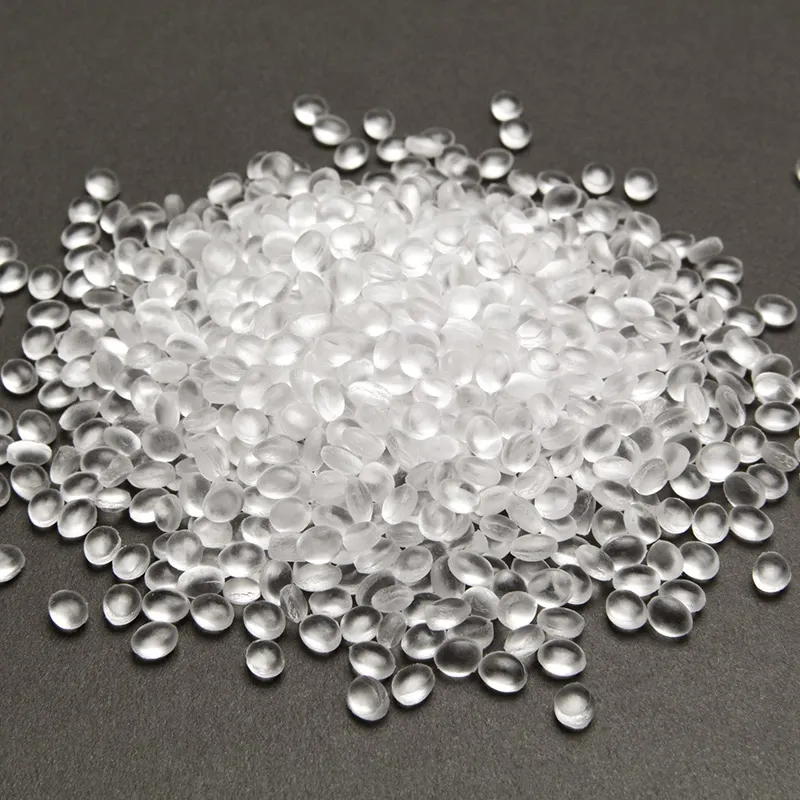
Polypropylene is generally a solid material supplied in forms such as pellets, granules, or powder, depending on the intended application and manufacturing process. It is insoluble in water and has a density below that of water in typical commercial forms. Its thermal behavior is grade-dependent; many conventional isotactic grades exhibit melting temperatures around 160–170°C, while other structural forms and formulations may differ.
For processors, melt flow rate, mechanical performance, thermal stability, and additive content are often more useful selection criteria than the generic polymer name alone. A grade intended for thin-wall injection molding may not perform in the same way as one designed for fibers, films, or extrusion. The appropriate material should therefore be matched to the product geometry, processing equipment, operating temperature, and required end-use properties.
Polypropylene is not itself a catalyst. Although this page may be listed under a catalysts or auxiliaries category on a website, the substance identified by CAS 9003-07-0 is a polymeric material. Its suitability for any specific application depends on the actual grade and whether the supplied material meets the relevant processing and performance requirements.
Chemical Properties
| Property | Details |
|---|---|
| Product Name | Polypropylene |
| Common Abbreviation | PP |
| CAS Number | 9003-07-0 |
| Molecular Formula | (C₃H₆)n |
| Repeat Unit | –CH₂–CH(CH₃)– |
| Molecular Weight | Variable; depends on polymer chain length and grade |
| IUPAC Name | Poly(1-methylethylene) |
| Chemical Class | Thermoplastic polyolefin |
| Monomer | Propylene (propene) |
| Typical Appearance | White to translucent solid; commercial form may be pellets, granules, powder, or molded material |
| Density | Commonly around 0.90 g/cm³ for many commercial grades; grade-dependent |
| Melting Behavior | Many conventional isotactic grades melt around 160–170°C; structure and formulation affect the value |
| Water Solubility | Insoluble in water |
| Water Absorption | Generally low |
| Electrical Properties | Generally a good electrical insulator |
| Chemical Resistance | Resistant to many aqueous acids and alkalis under suitable conditions; strong oxidizing agents may attack the polymer |
| Common Processing Methods | Injection molding, extrusion, film production, and fiber spinning |
| Storage Consideration | Keep away from excessive heat and ignition sources; protect from prolonged exposure to conditions that can accelerate oxidation or degradation |
Product Applications
1. Injection-Molded Components
Polypropylene is used to manufacture housings, closures, reusable containers, household components, and various industrial parts. The grade should be selected according to flow requirements, stiffness, impact performance, and the dimensions of the finished component.
2. Packaging Films and Containers
Suitable grades can be processed into films, thin-wall packaging, caps, tubs, and rigid containers. Film clarity, stiffness, sealing behavior, and impact resistance depend on the polymer structure and formulation.
3. Fibers and Nonwoven Materials
Polypropylene can be melt-spun into fibers for textiles, filtration media, carpets, and nonwoven products. Fiber-grade selection depends on melt flow, spinning stability, tensile requirements, and the intended fabric structure.
4. Extruded Sheets, Profiles, and Pipes
Extrusion grades are used to produce sheets, profiles, and selected piping or fluid-handling components. The application must account for the temperature, pressure, chemical environment, and mechanical loads expected during service.
5. Automotive and Industrial Parts
Polypropylene is used in selected interior components, covers, housings, and other lightweight parts. Impact-modified or filled grades may be chosen where the application requires a different balance of stiffness, dimensional stability, and impact resistance.
6. Electrical Insulation and Component Manufacturing
Because polypropylene generally exhibits good electrical insulating properties and low moisture uptake, it can be used in suitable electrical components and insulating structures. Electrical performance and long-term thermal stability must be matched to the operating conditions.
FAQ
Q1: What is Polypropylene CAS 9003-07-0?
Polypropylene is a thermoplastic polymer made from propylene. Its repeating-unit formula is commonly written as (C₃H₆)n, and PP is its widely used abbreviation.
Q2: Is polypropylene a catalyst?
No. Polypropylene is a polymeric material, not a catalyst. It is used primarily in manufacturing plastic products, fibers, films, and molded components.
Q3: Does polypropylene dissolve in water?
No. Polypropylene is insoluble in water and generally has low water absorption.
Q4: What is the melting point of polypropylene?
The melting temperature depends on the polymer's structure and grade. Many conventional isotactic grades melt around 160–170°C, but this range should not be treated as a specification for every polypropylene product.
Q5: Can all polypropylene grades be used for injection molding?
No. Grades differ in melt flow behavior, mechanical properties, and intended processing method. A grade designed for injection molding may not be interchangeable with one intended for fiber spinning or film extrusion.
Q6: What information should be checked when selecting polypropylene?
Important parameters include melt flow rate, density, tensile and impact properties, thermal behavior, additive package, and intended processing method. Food-contact, medical, electrical, or other regulated uses also require confirmation that the specific grade meets the applicable requirements.


