

Product Description
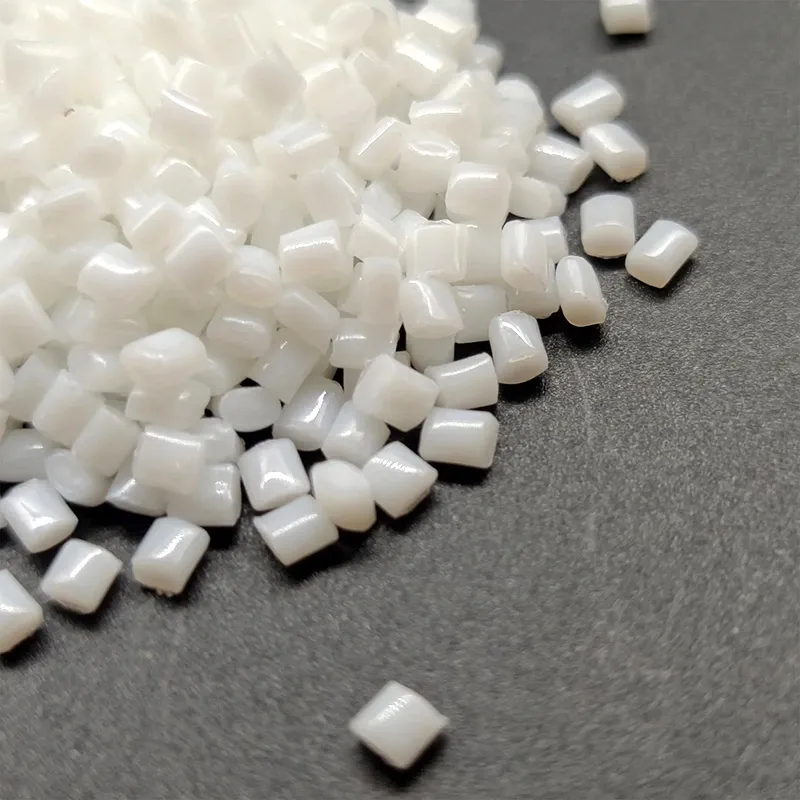
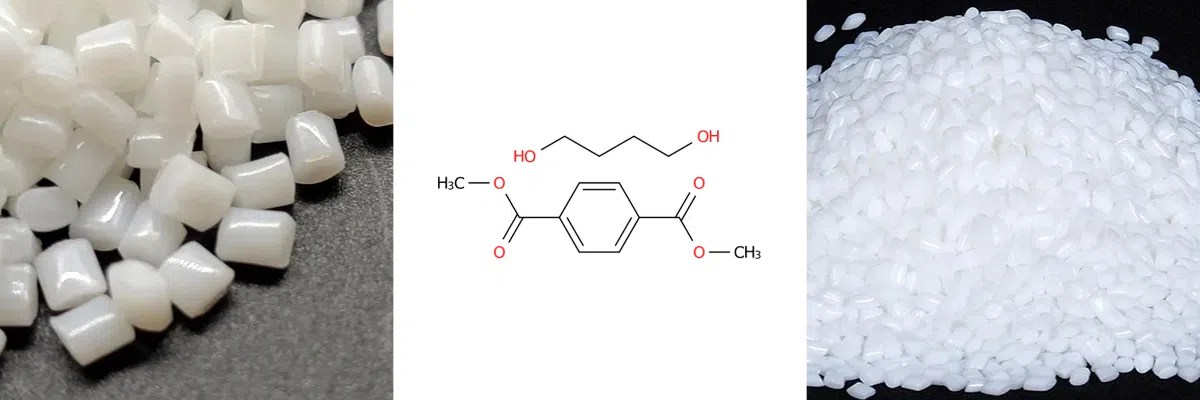
Polybutylene Terephthalate (PBT) is a semicrystalline thermoplastic polyester identified by CAS number 26062-94-2. Its polymer chain contains aromatic terephthalate groups linked through butylene segments. The repeating unit is commonly represented as [–O(CH₂)₄OCOC₆H₄CO–]ₙ.
PBT is valued in engineering applications where a combination of dimensional stability, electrical insulation, chemical resistance, and efficient thermoplastic processing is required. Its semicrystalline structure contributes to its stiffness and thermal behavior, while the balance between strength and impact performance varies with molecular characteristics, crystallinity, additives, and any reinforcing materials.
Commercial PBT resin is commonly supplied as solid pellets for melt processing. It is generally processed by injection molding and can also be used in selected extrusion and fiber applications. Moisture management before processing is important because absorbed moisture can promote hydrolytic degradation during melt processing, potentially reducing molecular weight and impairing mechanical properties. Drying conditions should follow the requirements for the actual resin grade and equipment.
PBT is used extensively in electrical and electronic components, automotive parts, precision housings, and mechanical components. In these applications, resin selection involves more than nominal melting temperature: melt flow, shrinkage, impact strength, heat resistance, and electrical performance can all influence part design and manufacturing results.
Unfilled PBT should be distinguished from glass-fiber-reinforced, flame-retardant, impact-modified, and other formulated grades. These modifications can change stiffness, dimensional behavior, flammability performance, and processing requirements. For a reliable material selection, the intended component geometry and service conditions should guide the choice of grade rather than assuming all PBT resins have identical properties.
Chemical Properties
| Property | Details |
|---|---|
| Product Name | Polybutylene Terephthalate |
| Abbreviation | PBT |
| CAS Number | 26062-94-2 |
| Chemical Name | Poly(1,4-butylene terephthalate) |
| Polymer Class | Semicrystalline thermoplastic polyester |
| Polymer Precursors | Terephthalic acid or a related ester, and 1,4-butanediol |
| Repeat Unit Formula | (C₁₂H₁₂O₄)ₙ as a simplified repeat-unit representation |
| Repeat Unit Structure | [–O(CH₂)₄OCOC₆H₄CO–]ₙ |
| Molecular Weight | Variable; depends on polymer chain length |
| Typical Appearance | Solid pellets or granules, commonly white to natural or off-white before coloration |
| Density | Commonly around 1.3 g/cm³ for unfilled grades; formulation-dependent |
| Melting Temperature | Typically around 220–230°C for many standard grades |
| Water Solubility | Insoluble in water |
| Moisture Behavior | Relatively low water absorption; moisture can cause hydrolytic degradation during melt processing |
| Thermal Characteristics | Semicrystalline polymer with grade-dependent heat resistance |
| Electrical Characteristics | Generally good electrical insulation properties |
| Common Processing Methods | Injection molding; selected extrusion and fiber-processing applications |
| Main Material Selection Factors | Melt flow, viscosity, shrinkage, impact performance, heat resistance, and additive or reinforcement content |
Product Applications
1. Electrical Connectors and Terminal Components
PBT is widely used in connector bodies, terminal blocks, switch components, and insulating housings. Its dimensional stability and electrical properties are useful where components must retain their geometry and provide reliable insulation.
2. Automotive Electrical and Under-Hood Components
Selected PBT grades are used in sensor housings, electrical connectors, clips, and other automotive components. Grade selection must account for temperature exposure, vibration, fluid contact, and the mechanical loads expected during service.
3. Precision Injection-Molded Parts
PBT can be molded into detailed components that require repeatable dimensions and a relatively rigid structure. Tool design, mold temperature, cooling conditions, and resin shrinkage behavior influence final part accuracy.
4. Switches, Relays, and Electrical Housings
PBT is suitable for selected switch bodies, relay components, and protective electrical enclosures. Where flame resistance is required, the specific grade must meet the applicable flammability and electrical safety requirements.
5. Mechanical Components and Wear-Related Parts
PBT may be used in gears, guides, supports, and other mechanical parts where stiffness, friction behavior, and dimensional consistency are important. Suitability depends on load, lubrication, temperature, and the motion conditions of the component.
6. Fibers and Specialized Extruded Products
Selected PBT grades can be processed into filaments and other extruded forms. The material's melt behavior and mechanical properties must be appropriate for the required fiber or profile dimensions and downstream processing conditions.
FAQ
Q1: What is Polybutylene Terephthalate (PBT)?
PBT is a semicrystalline thermoplastic polyester identified by CAS number 26062-94-2. It is used to manufacture engineering components that require a useful combination of mechanical, electrical, and dimensional properties.
Q2: What is the difference between PBT and PET?
Both are thermoplastic polyesters, but they contain different glycol-derived segments in their polymer chains. These structural differences affect crystallization, processing behavior, and end-use properties, so the materials are not interchangeable in every application.
Q3: Does PBT absorb water?
PBT generally has relatively low water absorption, but it is not completely moisture-proof. Moisture control remains important before melt processing because water can cause hydrolytic degradation at processing temperatures.
Q4: What is the melting temperature of PBT?
Many standard PBT grades have melting temperatures around 220–230°C. The actual value depends on the resin grade and should be confirmed using the relevant technical specification.
Q5: Is all PBT suitable for electrical components?
No. Although PBT is commonly used for electrical and electronic parts, the required dielectric properties, temperature rating, dimensional performance, and flame resistance depend on the application and the specific grade.
Q6: What should be considered when selecting a PBT grade?
Important factors include melt flow, molding shrinkage, impact strength, heat resistance, moisture control, and whether the material is unfilled, reinforced, or flame-retardant. The grade should be selected according to the component's processing method and service requirements.


