

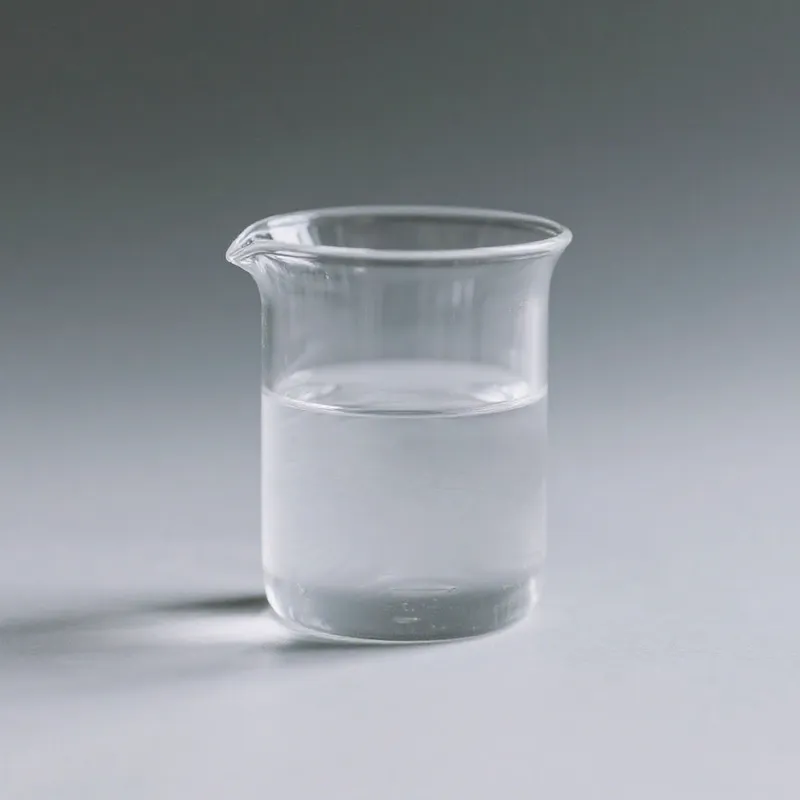
Product Description
DMI, or 1,3-dimethyl-2-imidazolidinone, is a cyclic urea compound identified by CAS number 80-73-9. It has the molecular formula C₅H₁₀N₂O and a molecular weight of approximately 114.15 g/mol. Its ring structure contains two methyl-substituted nitrogen atoms and a carbonyl group, giving the molecule its characteristic solvent behavior.
DMI is classified as a polar aprotic solvent. Its molecular polarity makes it useful for evaluating the dissolution and processing of selected organic and inorganic compounds. Unlike protic solvents, it does not contain an O–H or N–H bond, a distinction that can be important when selecting a reaction medium for moisture-sensitive or polarity-dependent chemical processes. Suitability nevertheless depends on the reactants, catalysts, temperature, and other conditions in the system.
The material is generally a clear, colorless liquid at room temperature, although its melting point is close enough to typical ambient temperatures that cooler storage conditions may affect its physical state. Its boiling point is approximately 224–226°C, and its density is around 1.05–1.06 g/mL near room temperature. These are reference values; the actual specification should be based on the grade supplied and the applicable test method.
Industrial applications include use as a reaction solvent in selected chemical synthesis processes, a processing medium in polymer-related chemistry, and a solvent component in certain surface-treatment or formulation systems. Its comparatively high boiling point can be useful where sustained heating is required, but solvent recovery, residual-solvent control, and compatibility with equipment should be considered during process development.
For raw-material selection, the most important factors are assay, water content, color, and the intended operating conditions. DMI can absorb moisture, so exposure during storage and transfer may affect applications that require low water content. Buyers should also review the current safety documentation and confirm that the proposed use is permitted under applicable workplace and environmental requirements.
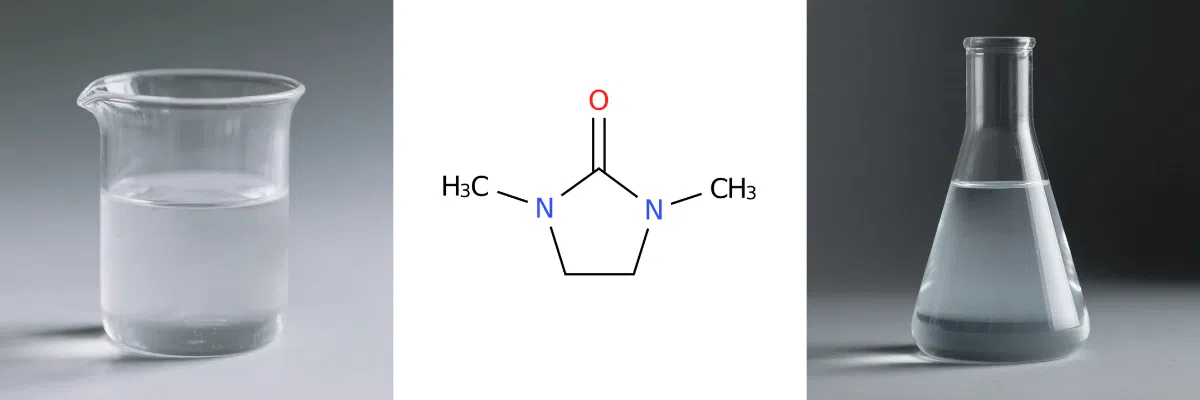
Chemical Properties
| Property | Details |
|---|---|
| Product Name | DMI (1,3-Dimethyl-2-imidazolidinone) |
| CAS Number | 80-73-9 |
| Molecular Formula | C₅H₁₀N₂O |
| Molecular Weight | 114.15 g/mol |
| IUPAC Name | 1,3-Dimethylimidazolidin-2-one |
| Common Synonyms | Dimethylethyleneurea; 1,3-Dimethyl-2-imidazolidone; N,N′-Dimethylethyleneurea |
| InChIKey | CYSGHNMQYZDMIA-UHFFFAOYSA-N |
| Chemical Class | Cyclic urea; polar aprotic solvent |
| Functional Group | Cyclic urea carbonyl with two N-methyl substituents |
| Appearance | Typically clear, colorless liquid |
| Melting Point | Approximately 8°C |
| Boiling Point | Approximately 224–226°C at atmospheric pressure |
| Density | Approximately 1.05–1.06 g/mL near 20–25°C |
| Water Compatibility | Miscible with water |
| Hygroscopic Behavior | Can absorb moisture from the environment |
| Solvent Characteristics | High polarity; aprotic; relatively high boiling point |
| Storage Considerations | Keep in tightly closed, compatible packaging and limit moisture exposure; follow the product-specific safety and storage instructions |
Product Applications
1. Chemical Synthesis and Reaction Media
DMI can serve as a solvent for selected organic synthesis processes where a polar aprotic environment is required. Its suitability should be assessed against the reaction mechanism, reagent compatibility, temperature, and downstream separation requirements.
2. Polymer Chemistry and Processing
In polymer-related research and industrial process development, DMI may be evaluated as a reaction or processing medium. Selection depends on polymer chemistry, solubility behavior, thermal conditions, and the need to remove residual solvent from the final material.
3. Industrial Formulation Development
DMI can be considered for formulations requiring a polar solvent with a relatively high boiling point. Compatibility, storage stability, evaporation behavior, and effects on the finished product should be tested for the specific formulation.
4. Surface Treatment and Materials Processing
Selected surface-treatment systems may use DMI as a solvent or carrier for compatible chemical ingredients. Its use should be evaluated in relation to substrate compatibility, process temperature, residue requirements, and solvent recovery.
5. Laboratory and Process Research
DMI is useful in laboratory studies that investigate solvent effects, compound solubility, or reaction performance in polar aprotic media. Experimental selection should account for moisture sensitivity, chemical stability, and the requirements of the analytical method.
6. Solvent Recovery and Process Optimization
Because of its relatively high boiling point, DMI may be considered in processes designed around controlled solvent separation or recovery. Actual recovery efficiency depends on the mixture composition, operating pressure, thermal stability, and equipment design.
FAQ
Q1: What is DMI CAS 80-73-9?
DMI is 1,3-dimethyl-2-imidazolidinone, a cyclic urea compound used primarily as a polar aprotic solvent in selected chemical and industrial processes.
Q2: What are the molecular formula and molecular weight of DMI?
Its molecular formula is C₅H₁₀N₂O, and its molecular weight is approximately 114.15 g/mol.
Q3: Is DMI a polar aprotic solvent?
Yes. Its molecular structure and solvent characteristics place it in the polar aprotic solvent category. Its suitability for a specific reaction depends on the reactants and operating conditions.
Q4: Is DMI soluble in water?
DMI is miscible with water. However, water content may need to be controlled in applications where moisture affects reaction performance or product quality.
Q5: What is the boiling point of DMI?
Its boiling point is commonly reported at approximately 224–226°C at atmospheric pressure. The observed value may vary with purity and measurement conditions.
Q6: What quality parameters should be checked before purchase?
Review the assay, water content, appearance or color, and any application-specific impurity limits. For moisture-sensitive processes, confirm the water specification and ensure that handling and storage practices limit moisture uptake.


