

Product Description
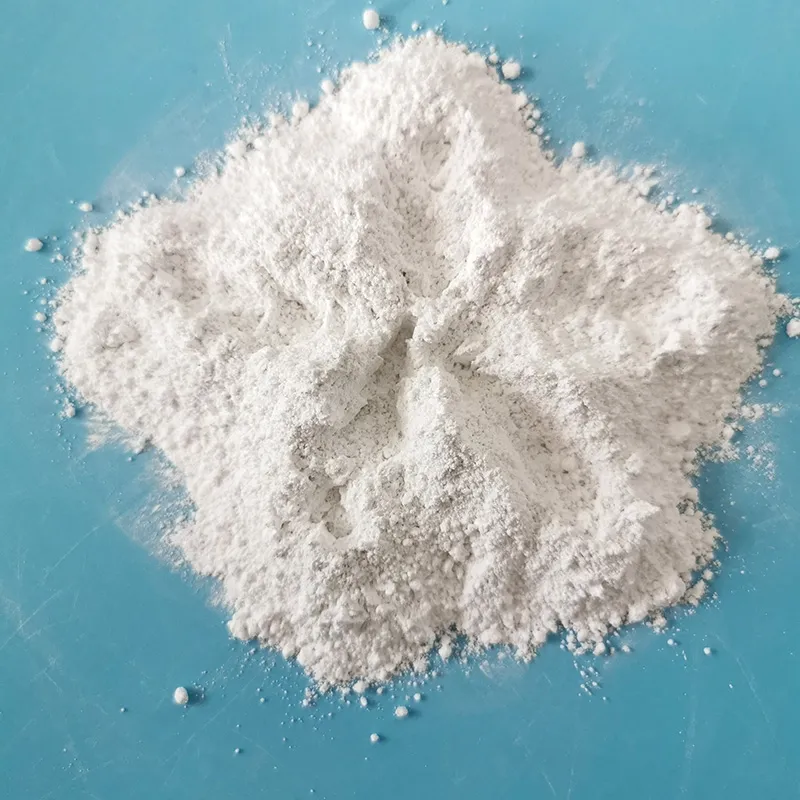
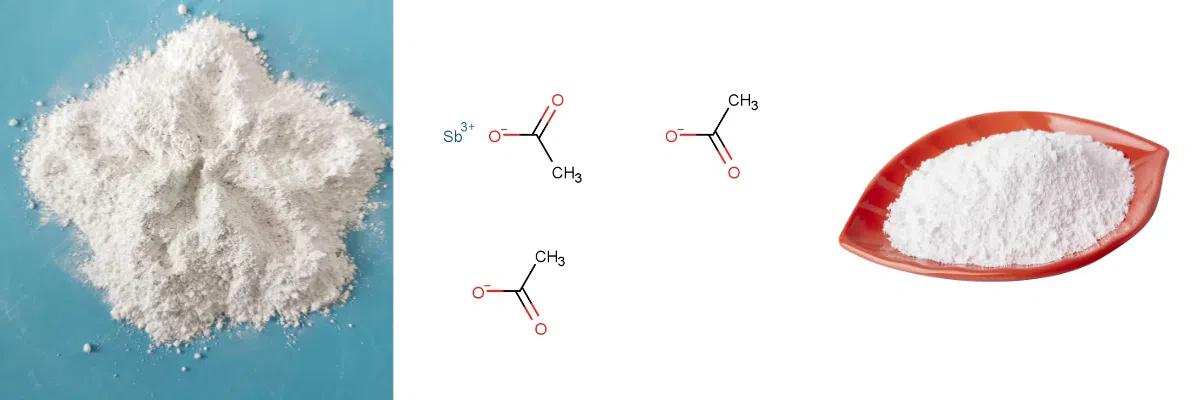
Antimony Triacetate, also known as Antimony(III) Acetate, is an inorganic antimony compound identified by CAS number 6923-52-0. Its molecular formula is C₆H₉O₆Sb, and its molecular weight is approximately 298.89 g/mol. The compound consists of trivalent antimony associated with three acetate groups.
Its principal industrial application is as a catalyst in polyester production, particularly in condensation-stage processing. In these systems, the catalyst is selected according to the polymerization route, feedstock composition, reaction conditions, and target polymer characteristics. The actual effect on reaction rate and finished-polymer properties should be established within the intended production process.
Antimony Triacetate is commonly described as a white to off-white solid or powder. It is sensitive to moisture and can undergo decomposition or hydrolysis in contact with water, so it should not be treated as a water-stable ingredient. Handling and incorporation methods need to account for the moisture sensitivity of the material and the requirements of the production system.
For polyester manufacturers, a particularly relevant specification is the antimony content, alongside assay, appearance, and moisture-related characteristics. These values help determine the quantity of material required for a process and whether the supplied grade is appropriate for the intended catalyst system. Antimony Triacetate should be distinguished from other antimony compounds because different chemical forms do not necessarily behave identically during processing.
Chemical Properties
| Property | Details |
|---|---|
| Product Name | Antimony Triacetate |
| Common Name | Antimony(III) Acetate |
| CAS Number | 6923-52-0 |
| Molecular Formula | C₆H₉O₆Sb |
| Molecular Weight | Approximately 298.89 g/mol |
| IUPAC Name | Antimony(3+) triacetate |
| Chemical Class | Inorganic antimony acetate |
| Antimony Oxidation State | +3 |
| Appearance | Typically white to off-white solid or powder |
| Melting Point | Approximately 126–131°C, reported value |
| Density | Approximately 1.22 g/mL at 25°C, reported value |
| Behavior in Water | Can decompose or undergo hydrolysis; not suitable to describe as simply water-soluble |
| Moisture Sensitivity | Moisture-sensitive |
| Primary Industrial Function | Catalyst for polyester condensation processes |
| Chemical Structure Identifier | InChIKey: JVLRYPRBKSMEBF-UHFFFAOYSA-K |
Product Applications
1. Polyester Condensation Catalysis
Antimony Triacetate is used as a catalyst in polyester manufacturing. Its role is evaluated against the selected monomers, process conditions, and target polymer specifications.
2. Polyester Resin Production
In polyester resin processes, catalyst selection is part of controlling reaction progression and achieving the desired material characteristics. Antimony Triacetate may be considered where a trivalent antimony catalyst is suitable for the production route.
3. Industrial Polymerization Process Development
Process developers can evaluate Antimony Triacetate in controlled trials to study catalyst loading, reaction behavior, and consistency between production batches. Its performance should be assessed in the actual reaction system rather than inferred from chemical identity alone.
4. Chemical Process and Materials Research
The compound can serve as an antimony-containing reagent in laboratory or pilot-scale studies involving acetate chemistry and catalyst evaluation. Research use should account for its moisture sensitivity and the handling requirements associated with antimony compounds.
FAQ
Q1: What is Antimony Triacetate?
Antimony Triacetate is a trivalent antimony acetate compound with CAS number 6923-52-0 and molecular formula C₆H₉O₆Sb. It is also known as Antimony(III) Acetate.
Q2: What is the main industrial use of Antimony Triacetate?
Its principal reported use is as a catalyst in polyester condensation processes. The suitability of a particular grade depends on the manufacturing route and required process specifications.
Q3: Is Antimony Triacetate soluble in water?
It should not be described as simply water-soluble. Published property references report decomposition or hydrolysis in contact with water, and the compound is moisture-sensitive.
Q4: What is the molecular weight of Antimony Triacetate?
Its molecular weight is approximately 298.89 g/mol, based on the molecular formula C₆H₉O₆Sb.
Q5: Which specifications matter most for polyester catalyst applications?
Antimony content, assay, moisture-related characteristics, and batch consistency are especially relevant. The required limits should be matched to the catalyst dosing method and the conditions of the intended polyester process.


