
Product Description
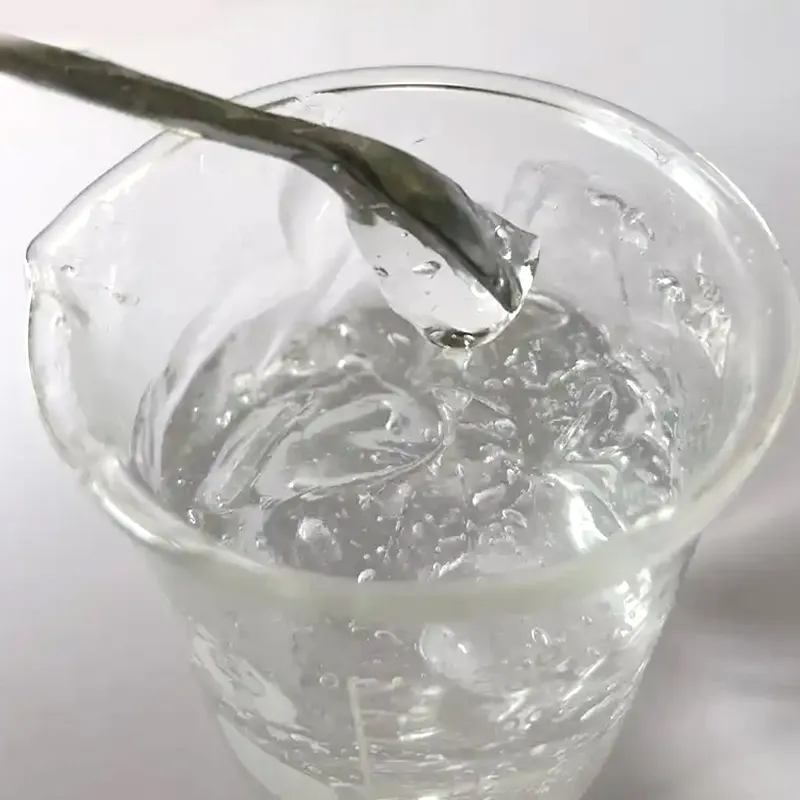
Polyisobutylene(CAS#9003-27-4), commonly abbreviated as PIB, is a non-toxic polymer presented as water-white viscous material. Its low glass transition temperature grants the product outstanding flexibility even under low-temperature working environments. As a linear saturated polymer built upon highly flexible molecular chains, PIB possesses remarkable extensibility and elastic characteristics. This material exhibits outstanding overall chemical stability, and manufacturers can adjust its molecular weight to customize grades that satisfy different industrial scenarios. Its kinematic viscosity measured at 100°C ranges from 5 cSt to 4,700 cSt, which is directly governed by molecular weight. Generally, products with higher molecular weight deliver stronger surface tackiness for end formulations.
Physical Properties
Form: Liquid or semi-solid state, subject to molecular weight variations
Color: Water-white to pale yellow
Odor: Faint characteristic odor or completely odorless
Viscosity: Varies with molecular weight; standard range from 5 to 4,700 cSt at 100°C
Density: Approximately 0.92 g/mL at 25°C
Solubility: Soluble in hydrocarbons, aromatic compounds, gasoline, cycloalkanes, mineral oils, chlorinated hydrocarbons and carbon disulfide; partially soluble in higher alcohols and ester compounds; insoluble in water, short-chain alcohols including methanol, ethanol and isopropanol, ethylene glycol, ketones such as acetone, as well as glacial acetic acid.
Core Chemical Properties
| Melting point | 54-56 °C |
| Boiling point | 300 °C |
| Density | 0.92 g/mL at 25 °C (lit.) |
| Tg | -61 |
| Tg | -62 |
| Tg | -64 |
| Tg | -75 |
| Refractive index | n20/D 1.51 |
| Fp | >212 |
| Fp | >482 |
| Form | slab/chunk |
| Stability | Stability Combustible. Incompatible with strong oxidizing agents. |
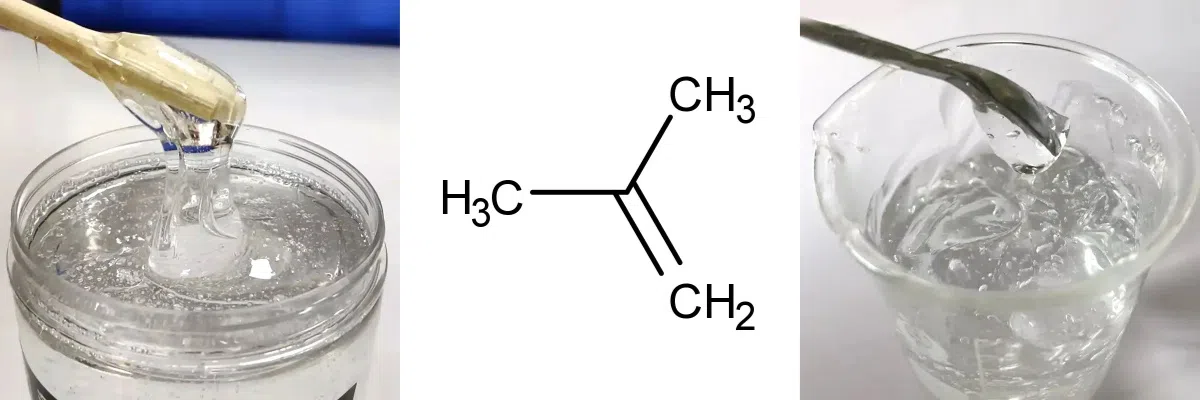
| InChI | InChI=1S/C4H8/c1-4(2)3/h1H2,2-3H3 |
| InChIKey | VQTUBCCKSQIDNK-UHFFFAOYSA-N |
| SMILES | C=C(C)C |
| EPA Substance Registry System | Polyisobutylene (9003-27-4) |
Product Applications
Lubricants: Serves as a premium additive for two-stroke engine oils, gear oils, greases, hydraulic fluids and metalworking fluids to boost viscosity retention and lubricating performance
Adhesives: A core raw material used in pressure-sensitive adhesive (PSA) and hot-melt adhesive (HMA) formulations to enhance adhesion and peel strength
Sealants: Well suited for manufacturing automotive sealants, tire sealants and window sealants, delivering durable sealing and waterproof effects
Stretch Film: Effectively improves tear resistance and tensile properties of stretch films, food-contact compliant grades are available for packaging applications
Electrical Insulation: Provides reliable hydrophobic, non-conductive and anti-oxidation insulation layer for electrical components
Cosmetics and Foods: Food-safe non-toxic grades are widely adopted as key components in chewing gum base