

Product Description
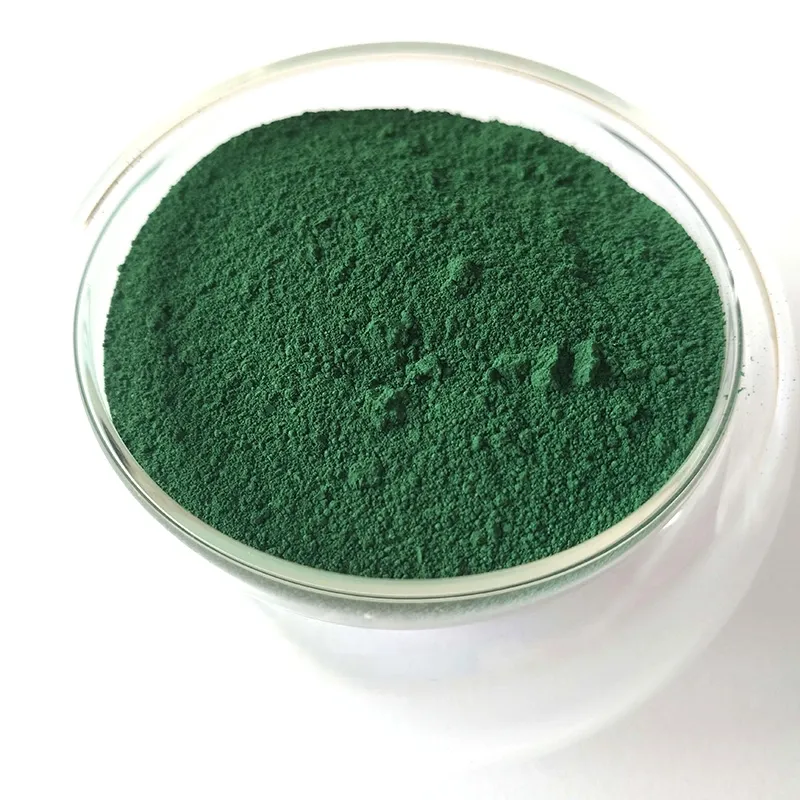
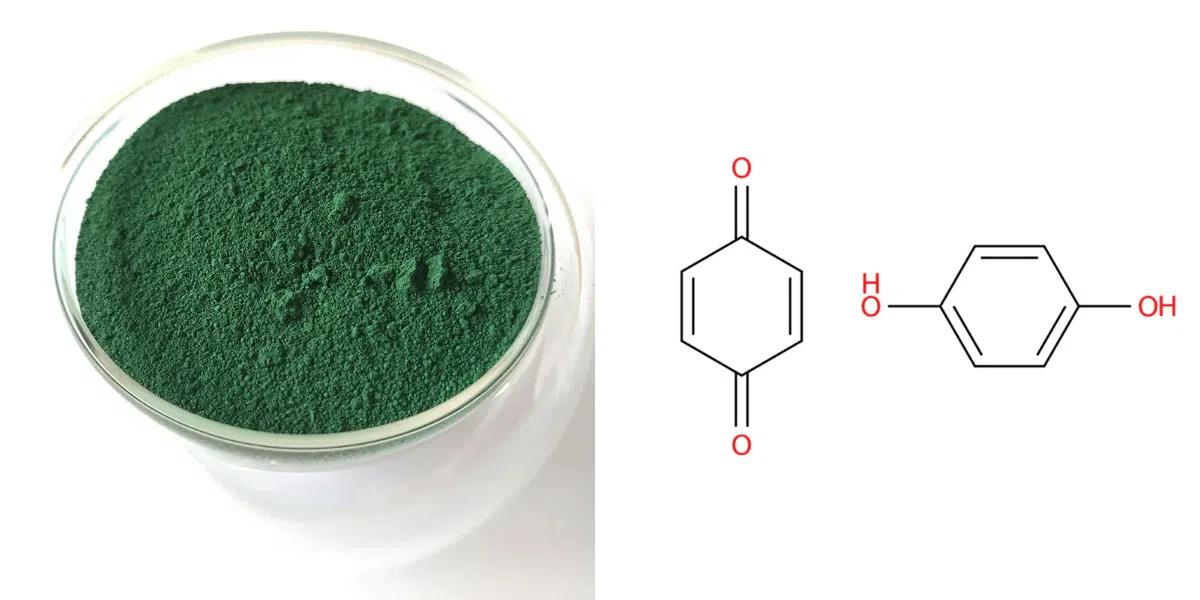
Quinhydrone, CAS 106-34-3, is a molecular complex formed from equimolar amounts of hydroquinone and p-benzoquinone. This dark green crystalline material is notable for its redox properties, which underpin its use in electrochemical experiments and analytical chemistry.
Unlike hydroquinone or p-benzoquinone supplied individually, quinhydrone contains both the reduced and oxidized forms of a related redox system. This makes it particularly relevant to studies of electron transfer, electrode potential, and chemical equilibrium. Its composition and behavior distinguish it from either component alone.
One established application is the quinhydrone electrode, a reference-based electrochemical approach historically used for determining the pH of suitable solutions. Quinhydrone is also used in potentiometric titrations and selected spectrophotometric research involving charge-transfer interactions. Its suitability depends on the analytical method, sample composition, and experimental conditions.
When purchasing quinhydrone, confirm the required purity, appearance, packaging, and intended analytical use. For quantitative work, review the supplier's Certificate of Analysis (COA) and ensure the material meets the method-specific requirements. Follow the Safety Data Sheet (SDS) for handling, storage, and disposal, and assess compatibility with the sample and measurement system before use.
Chemical Properties
| Property | Details |
|---|---|
| Product Name | Quinhydrone |
| CAS Number | 106-34-3 |
| Molecular Formula | C₁₂H₁₀O₄ |
| Molecular Weight | 218.21 g/mol |
| Composition | Hydroquinone and p-benzoquinone in a 1:1 molar ratio |
| Common Synonyms | Quinhydron, Chinhydron, p-Benzoquinhydrone, Green Hydroquinone |
| PubChem CID | 7801 |
| MDL Number | MFCD00010310 |
| Appearance | Dark green crystalline powder |
| Melting Point | Approximately 167–172°C; reported values may vary by source and grade |
| Boiling Point | Some reference sources report approximately 285°C; thermal behavior should be checked against the applicable technical data |
| Solubility in Water | Limited; approximately 4 g/L is reported in some references, with temperature and test conditions affecting the value |
| Chemical Behavior | Redox-active molecular complex |
| Principal Laboratory Relevance | Electrochemical measurements, potentiometric analysis, and selected spectrophotometric studies |
| Storage | Store in a tightly closed, compatible container under the temperature and handling conditions specified in the supplier's SDS |
The values above are typical reference data, not a substitute for a product-specific specification. Confirm purity, solubility test conditions, and storage requirements with the supplier before use.
Product Applications
1. Quinhydrone Electrode Systems
Quinhydrone is used in quinhydrone electrode methods for measuring pH in suitable aqueous samples. The method has limitations, including sample compatibility and the applicable pH range, so it should only be used where the analytical procedure supports it.
2. Potentiometric Titrations
Its redox characteristics make quinhydrone useful in selected potentiometric experiments and titration methods. The suitability of the reagent depends on the analyte, reaction conditions, and measurement protocol.
3. Electrochemical Research
Quinhydrone can be used in laboratory investigations of oxidation–reduction equilibria, electrode potentials, and electron-transfer behavior. It is relevant to research requiring a defined relationship between hydroquinone and p-benzoquinone.
4. Spectrophotometric and Charge-Transfer Studies
Quinhydrone has been used in research on charge-transfer complexes and spectrophotometric analysis. Such applications require validation of the analytical procedure and the interaction between the reagent and the target analyte.
5. Materials and Semiconductor Research
Quinhydrone-based treatments have been investigated in selected semiconductor studies, including methods related to carrier-lifetime measurement in crystalline silicon. This is a specialized research application rather than a general-purpose industrial use, and process compatibility must be established experimentally.

FAQ
Q1: What is Quinhydrone?
A: Quinhydrone is a molecular complex consisting of hydroquinone and p-benzoquinone in a 1:1 molar ratio.
Q2: What are the CAS number and molecular weight of Quinhydrone?
A: Its CAS number is 106-34-3, and its molecular weight is approximately 218.21 g/mol.
Q3: Is Quinhydrone the same as Hydroquinone?
A: No. Hydroquinone is one component of quinhydrone. Quinhydrone also contains p-benzoquinone, and the two substances should not be treated as interchangeable products.
Q4: What is Quinhydrone mainly used for?
A: Its established laboratory uses include quinhydrone electrode systems, selected potentiometric titrations, electrochemical research, and certain spectrophotometric studies.
Q5: What should be checked before purchasing Quinhydrone?
A: Confirm the required purity, appearance, packaging, analytical grade, and method-specific requirements. Review the current COA and SDS before using the material in laboratory procedures.


