

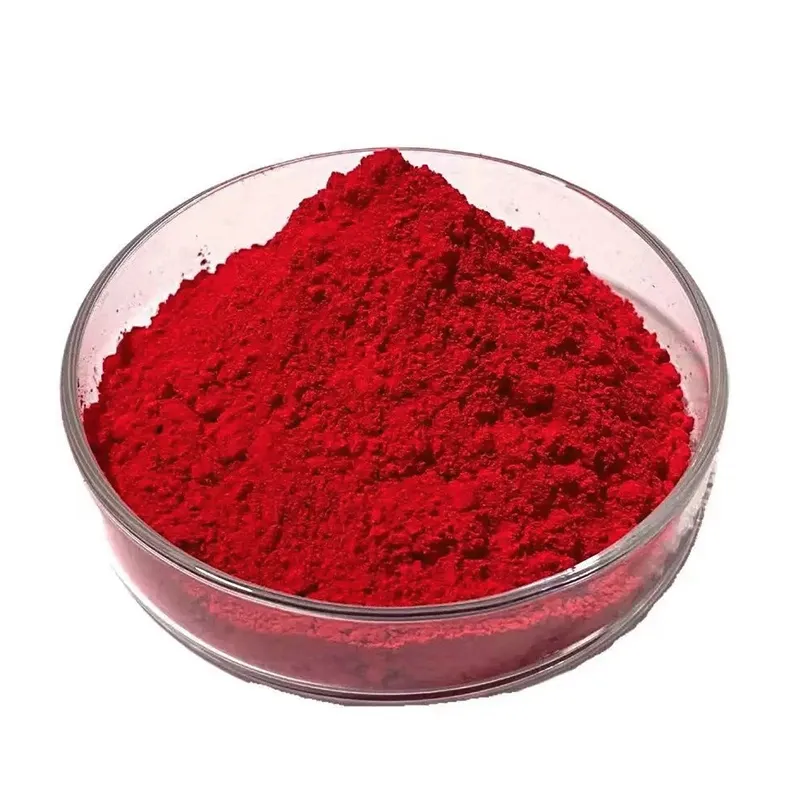
Product Description
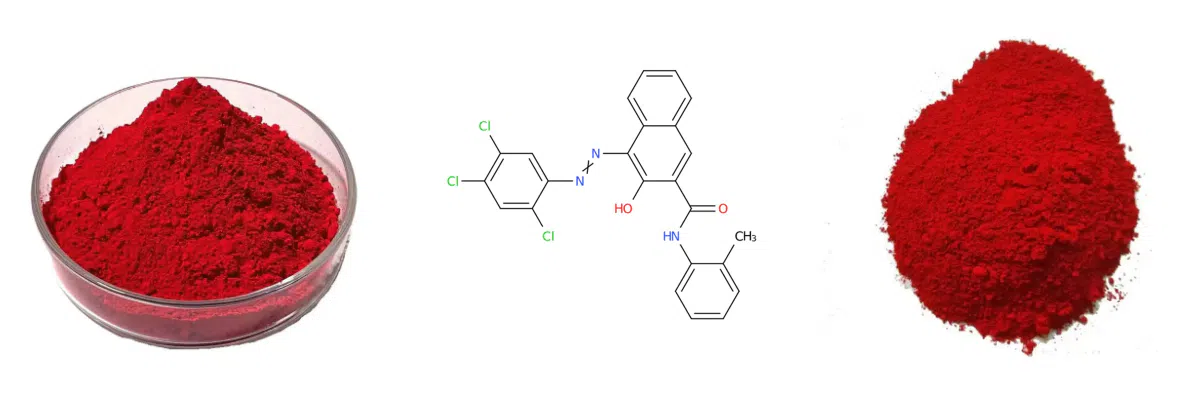
Pigment Red 112 is a synthetic organic red pigment identified by CAS 6535-46-2 and Color Index number C.I. 12370. Its chemical structure belongs to the azo pigment family and includes a substituted naphthalene carboxamide framework. The molecular formula is C24H16Cl3N3O2, with a molecular weight of approximately 484.8 g/mol.
This pigment is used in color-formulation work for printing inks, industrial coatings, selected plastic applications, and textile printing. Its suitability depends on the required shade, color strength, dispersion behavior, processing temperature, and durability expectations. Performance should be confirmed in the actual binder, resin, substrate, or ink system rather than inferred from the pigment name alone.
Pigment Red 112 is generally supplied as a red powder. Since it functions as a particulate colorant, proper wetting and dispersion are important for minimizing agglomeration and achieving consistent color development. The final appearance and technical performance may vary according to particle properties, pigment concentration, processing conditions, and the formulation used.
For procurement, buyers should identify the material by both its full name and CAS number. Before selecting a grade, review the current technical specification and Certificate of Analysis (COA), and request relevant application data for color strength, particle size or fineness, moisture, heat resistance, and fastness properties where required. Suitability for regulated applications should be verified separately against the relevant local requirements.
Chemical Properties
| Property | Details |
|---|---|
| Product Name | Pigment Red 112 |
| CAS Number | 6535-46-2 |
| Color Index Name | C.I. Pigment Red 112 |
| Color Index Number | C.I. 12370 |
| Molecular Formula | C24H16Cl3N3O2 |
| Molecular Weight | Approximately 484.8 g/mol |
| Chemical Class | Synthetic organic azo pigment |
| Chemical Name | 3-Hydroxy-N-(2-methylphenyl)-4-[(2,4,5-trichlorophenyl)azo]naphthalene-2-carboxamide |
| Appearance | Typically red powder; confirm the supplied grade |
| Color | Red; exact shade depends on grade and application |
| Water Behavior | Generally insoluble in water, as expected for a conventional organic pigment |
| Main Application Areas | Printing inks, coatings, selected plastics, textile printing |
| Key Performance Parameters | Color strength, shade, dispersion, fineness, lightfastness, heat resistance, and application-specific fastness |
| Storage | Store in a sealed container in a dry, well-ventilated area and follow the supplied safety documentation |
Product Applications
1. Printing Inks
Pigment Red 112 can be considered for selected printing ink systems, including packaging and commercial printing formulations. Ink compatibility, dispersion quality, print shade, and resistance requirements should be tested under the intended printing conditions.
2. Industrial Coatings
The pigment may be used to formulate red shades in suitable industrial coating systems. Selection should take into account binder compatibility, application method, film appearance, exposure conditions, and the required durability.
3. Plastic Coloration
Pigment Red 112 can be evaluated for coloring selected plastic materials where its heat stability and compatibility meet the processing requirements. Processing temperature, residence time, polymer type, and the target shade should be considered during grade selection.
4. Textile Printing
It may be used in suitable textile-printing formulations when the pigment's dispersion characteristics and fastness profile meet the requirements of the fabric and printing process. Testing should cover the relevant washing, rubbing, light, and finishing conditions.
5. Color Matching and Shade Development
Pigment Red 112 can be used in color-matching work to develop specific red shades or adjust the hue of a formulation. Laboratory trials help establish the appropriate dosage and evaluate interactions with other colorants in the formulation.
6. Technical Formulation Research
The pigment can support laboratory screening of color strength, dispersion behavior, and application performance in inks, coatings, and polymer systems. Results should be documented using consistent test methods and representative processing conditions.
FAQ
Q1: What is Pigment Red 112?
Pigment Red 112 is a synthetic organic red pigment used in selected ink, coating, plastic-coloration, and textile-printing applications.
Q2: What is the CAS number of Pigment Red 112?
Its CAS number is 6535-46-2. The corresponding Color Index number is C.I. 12370.
Q3: What are the molecular formula and molecular weight?
The molecular formula is C24H16Cl3N3O2, and the commonly reported molecular weight is approximately 484.8 g/mol.
Q4: Is Pigment Red 112 water-soluble?
It is generally insoluble in water and is used as a dispersed pigment rather than as a water-soluble dye. The dispersion system and formulation conditions influence its practical use.
Q5: Which technical data should be reviewed before purchasing?
Review the product identity, shade, color strength, fineness or particle-size data, moisture content, and any available heat-resistance and fastness data relevant to the intended application. Confirm acceptance criteria with the supplier before ordering.
Q6: Can one grade be used in every application?
Not necessarily. Ink, coating, plastic, and textile-printing systems can have different requirements for dispersion, heat stability, shade, and durability. Choose a grade based on the end-use specification and confirm performance through application testing.


