

Product Description
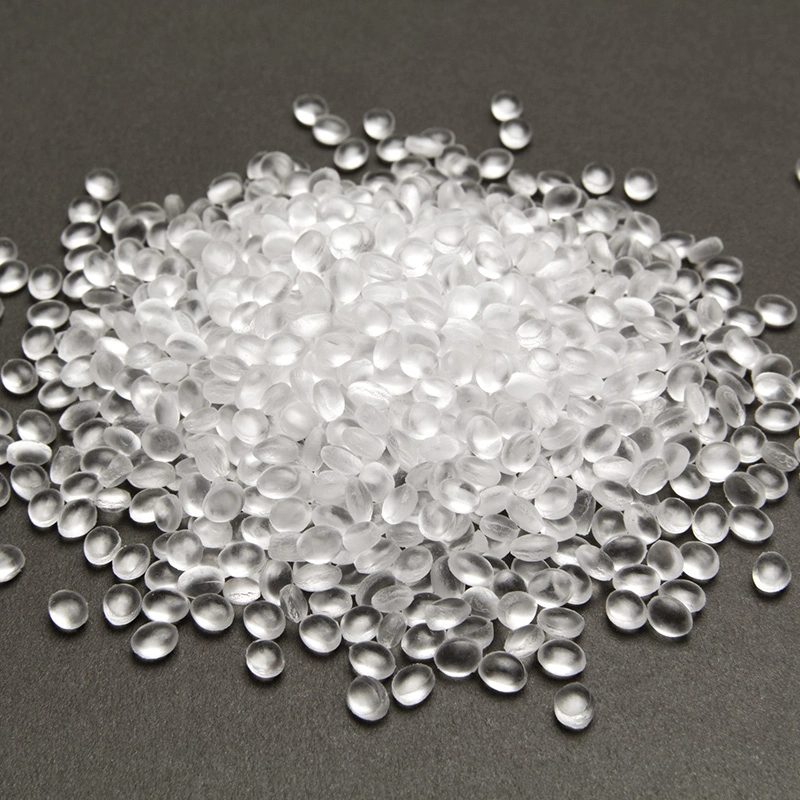
Polypropylene (PP), CAS No. 9003-07-0, is a thermoplastic polymer produced from propylene monomers. Its combination of low density, useful mechanical properties, moisture resistance, and processability makes it an established material for packaging, consumer products, industrial components, and manufactured plastic parts.
Polypropylene resin is available in different grades designed for specific processing methods and performance requirements. Homopolymer PP is commonly selected for applications requiring stiffness and strength, while random copolymer grades may be preferred when improved clarity or sealing behavior is needed. Impact copolymer grades are often considered for parts requiring better toughness under impact conditions.
The choice of resin affects not only the final product's mechanical properties but also melt flow, cycle time, surface finish, and dimensional performance. For this reason, polypropylene should be specified by both its material type and its processing requirements rather than by the generic name alone.
Depending on the intended application, PP resin may be supplied in pellet or granule form for conversion by injection molding, extrusion, or other suitable thermoplastic processes. Buyers should confirm the grade designation, melt mass-flow rate, additive package, color, and applicable compliance requirements before placing a production order.
Chemical Properties
| Property | Description |
|---|---|
| Product Name | Polypropylene |
| Abbreviation | PP |
| CAS Number | 9003-07-0 |
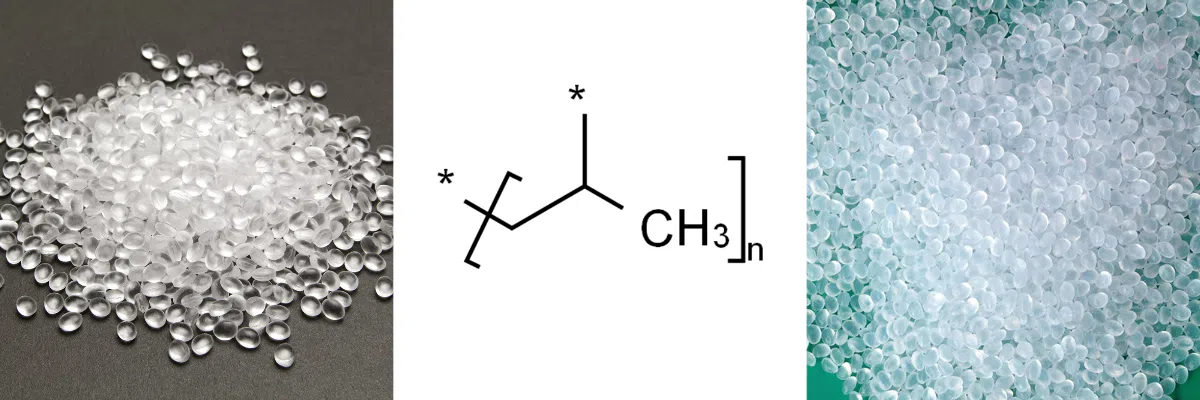
| Chemical Formula | (C₃H₆)ₙ |
| Polymer Type | Thermoplastic polyolefin |
| Monomer | Propylene |
| Appearance | Typically translucent white to off-white solid; commercial resin is commonly supplied as pellets or granules |
| Typical Density | Approximately 0.89–0.92 g/cm³, depending on grade |
| Melting Range | Common PP homopolymer grades are often around 160–165°C; copolymer grades may melt at lower temperatures |
| Water Solubility | Insoluble in water |
| Moisture Absorption | Generally low |
| Chemical Resistance | Resistant to many acids, alkalis, and aqueous solutions; strong oxidizing agents may attack the material |
| Processing Methods | Injection molding, extrusion, and other grade-appropriate thermoplastic processes |
| Main Grade Types | Homopolymer, random copolymer, impact copolymer |
| Key Selection Parameters | Melt mass-flow rate, density, stiffness, impact strength, color, additives, and regulatory requirements |
Property note: The values above are general reference information for polypropylene, not guaranteed specifications for every grade. Melting behavior, density, melt flow, and mechanical performance vary with polymer structure, additives, and test conditions. Refer to the selected grade's technical data sheet (TDS) and certificate of analysis (COA) for verified values.
Product Applications
1. Packaging and Containers
Polypropylene is used in packaging products such as caps, closures, tubs, reusable containers, and selected rigid packaging components. Grade selection depends on stiffness, impact performance, hinge requirements, and the intended contact environment.
2. Injection-Molded Parts
PP resin is suitable for manufacturing household goods, storage products, appliance components, and a wide range of molded industrial parts. The melt mass-flow rate should match the part geometry, wall thickness, mold design, and required production cycle.
3. Films and Extruded Products
Suitable polypropylene grades can be converted into films, sheets, profiles, and other extruded products. Film applications may require particular attention to clarity, stiffness, sealing characteristics, and processing stability.
4. Automotive Components
Selected PP homopolymer and impact copolymer grades are used in interior trim, molded covers, storage components, and other automotive parts. For these applications, impact performance, heat resistance, dimensional stability, and any applicable industry specifications should be evaluated together.
5. Household and Consumer Products
Polypropylene is commonly used for storage boxes, organizers, kitchenware, furniture components, and other everyday plastic products. The required balance of rigidity, appearance, durability, and cost determines the most suitable grade.
6. Industrial and Electrical Components
PP can be used in selected housings, fittings, chemical-handling components, and electrical products. Confirm the operating temperature, chemical exposure, mechanical loading, and electrical performance requirements before selecting a grade.
7. Fibers and Nonwoven Materials
Certain polypropylene grades are processed into fibers, filaments, and nonwoven materials for applications such as textiles, filtration media, and selected hygiene or industrial products. Fiber-grade requirements may differ substantially from those of injection-molding resin.
FAQ
Q1: What is polypropylene (PP) used for?
Polypropylene is used in packaging, molded consumer goods, automotive components, films, sheets, fibers, and selected industrial parts. The suitable grade depends on the manufacturing process and finished-product requirements.
Q2: What is the difference between PP homopolymer and copolymer?
Homopolymer PP is commonly selected for stiffness and strength. Random copolymer grades can offer improved clarity or sealing characteristics, while impact copolymer grades are often chosen when greater toughness is needed. Actual performance depends on the specific grade.
Q3: What is the typical density of polypropylene?
Many commercial PP grades have a density of approximately 0.89–0.92 g/cm³. The exact value depends on the grade, formulation, and test method.
Q4: Can polypropylene be used for injection molding and extrusion?
Yes. Commercial polypropylene grades are available for both processes, but they are not automatically interchangeable. Select the resin according to the required melt flow, equipment, product geometry, and final performance.
Q5: Is all polypropylene suitable for food-contact applications?
No. Food-contact suitability depends on the specific resin grade, additives, manufacturing conditions, and applicable regulations in the destination market. Obtain and verify the relevant compliance documentation before use.


