

Product Description
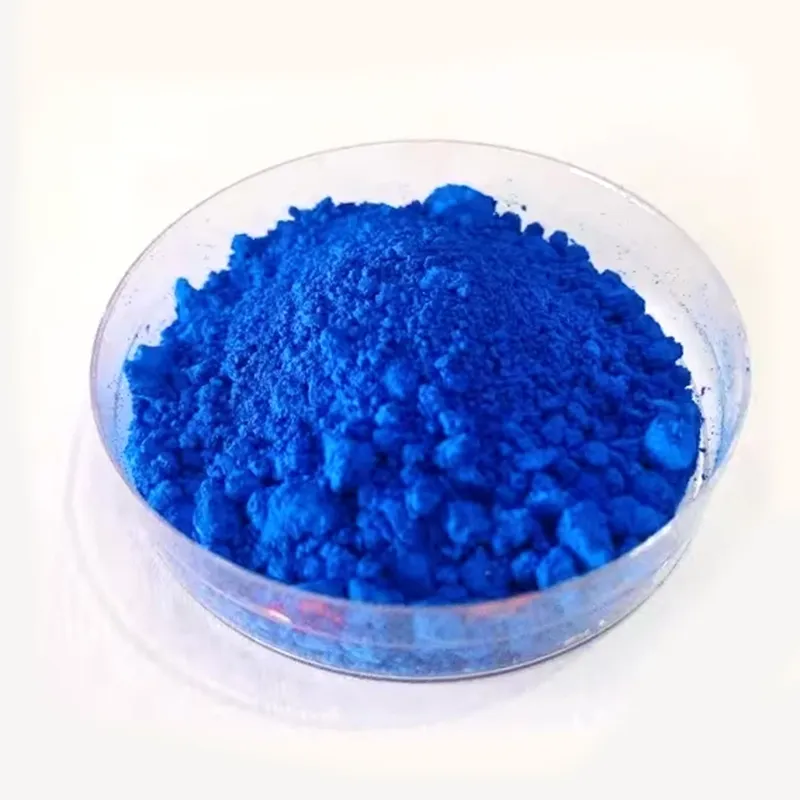
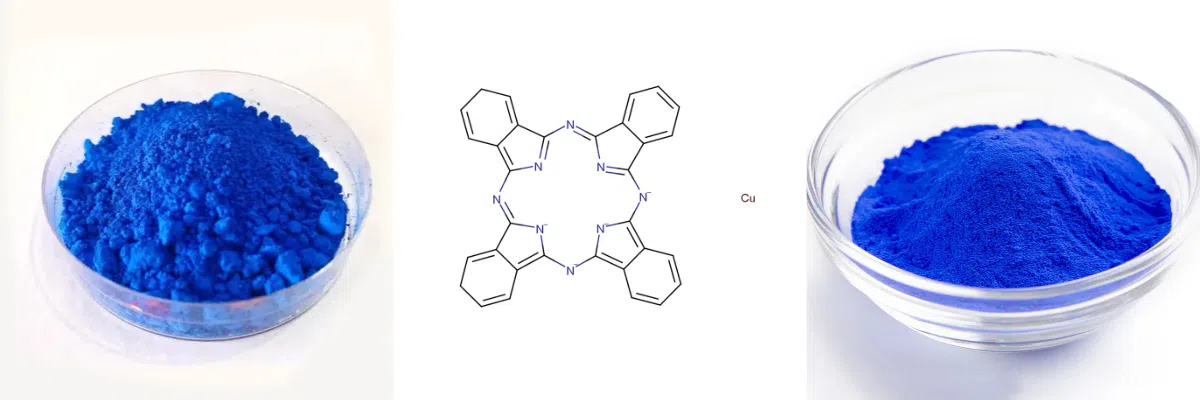
Copper(II) Phthalocyanine, commonly abbreviated as CuPc, is a copper-containing organic compound with a large conjugated ring structure. It is identified by CAS 147-14-8 and Color Index number C.I. 74160. The molecular formula is C32H16CuN8, and its molecular weight is approximately 576.07 g/mol. In pigment applications, it is commonly associated with the blue colorant category Pigment Blue 15.
The compound is valued for its intense blue coloration and use in industrial color formulation. Unlike water-soluble dyes, Copper(II) Phthalocyanine generally remains as a dispersed solid phase in the formulation. Its final color appearance depends on pigment concentration, particle characteristics, dispersion quality, the surrounding medium, and the selected grade.
Typical uses include printing inks, paints and coatings, plastic coloration, and selected industrial coloring systems. Depending on the intended application, formulators may need to assess color strength, shade, transparency or opacity, dispersion behavior, heat resistance, and weathering performance.
Copper(II) Phthalocyanine can occur in different crystal forms, and these forms are not necessarily interchangeable in every formulation. Buyers should confirm whether the required material is an unmodified pigment intermediate or a specific commercial pigment grade, and whether a particular Pigment Blue 15 subtype is required. The product name and CAS number should be checked against the supplier's specification, while application performance should be validated under the intended processing conditions.
Chemical Properties
| Property | Details |
|---|---|
| Product Name | Copper(II) Phthalocyanine |
| CAS Number | 147-14-8 |
| Molecular Formula | C32H16CuN8 |
| Molecular Weight | Approximately 576.07 g/mol |
| Common Abbreviation | CuPc |
| Chemical Class | Copper-containing organic macrocyclic compound |
| Common Synonyms | Copper Phthalocyanine; Phthalocyanine Blue; Phthalocyanine Copper |
| Color Index Number | C.I. 74160 |
| Associated Pigment Category | Pigment Blue 15; confirm the specific subtype against the product specification |
| Appearance | Typically dark blue to bright blue powder, depending on grade and physical form |
| Water Solubility | Generally insoluble in water |
| Solvent Behavior | Generally insoluble in common solvents such as ethanol; behavior depends on solvent and test conditions |
| Thermal Behavior | High thermal stability is characteristic of the compound; reported decomposition or melting behavior depends on test conditions |
| Main Technical Parameters | Assay, shade, color strength, particle size, dispersion, crystal form, and application-specific durability |
| Storage | Keep tightly sealed in a dry place and follow the supplied safety and handling documentation |
Product Applications
1. Printing Ink Formulations
Copper(II) Phthalocyanine is used in selected printing ink systems to provide blue coloration. Ink developers should evaluate pigment dispersion, shade, print density, binder compatibility, and the resistance requirements of the finished print.
2. Paints and Industrial Coatings
The pigment can be incorporated into suitable coating formulations where a strong blue color is required. Grade selection should account for the coating resin, application process, film appearance, outdoor exposure, and the desired durability.
3. Plastic Coloration
Copper(II) Phthalocyanine can be considered for coloring compatible thermoplastic and other polymer systems. Processing temperature, residence time, polymer type, dispersion quality, and the required blue shade should be assessed during formulation trials.
4. Pigment Concentrates and Masterbatches
Suitable grades can be evaluated for preparing pigment concentrates and color masterbatches. Consistent dispersion is important for minimizing specks, streaks, and uneven color development in downstream processing.
5. Industrial Color Matching
The material can be used to develop or adjust blue shades in pigment blends. Small-scale trials help determine the required addition level and reveal how the pigment interacts with other colorants and formulation components.
6. Specialty Colorant Research
Copper(II) Phthalocyanine may be used in laboratory studies involving organic pigments, dispersion systems, and color-formulation performance. The selected crystal form, purity, and test conditions should be documented to make results comparable.
FAQ
Q1: What is Copper(II) Phthalocyanine?
Copper(II) Phthalocyanine is a synthetic copper-containing organic compound known for its intense blue color. It is widely associated with the phthalocyanine blue pigment family.
Q2: What is the CAS number and molecular formula?
The CAS number is 147-14-8, and the molecular formula is C32H16CuN8. Its commonly reported molecular weight is approximately 576.07 g/mol.
Q3: Is Copper(II) Phthalocyanine water-soluble?
It is generally insoluble in water. In pigment formulations, it is dispersed throughout the medium rather than dissolved as a conventional water-soluble dye.
Q4: Is Copper(II) Phthalocyanine the same as every Pigment Blue 15 grade?
Not necessarily. Pigment Blue 15 is a broader pigment category that includes different crystal forms and subtypes. Confirm the required subtype, crystal form, and application specification before ordering.
Q5: Which industries use Copper(II) Phthalocyanine?
Common application areas include printing inks, coatings, plastics, pigment concentrates, and other industrial colorant systems. The appropriate grade depends on the processing conditions and required performance.
Q6: What should be checked before purchasing?
Confirm the CAS number, chemical identity, assay, color shade, crystal form where relevant, particle characteristics, dispersion performance, and any application-specific durability requirements. Review the current COA and technical specification before production use.


