

Product Description
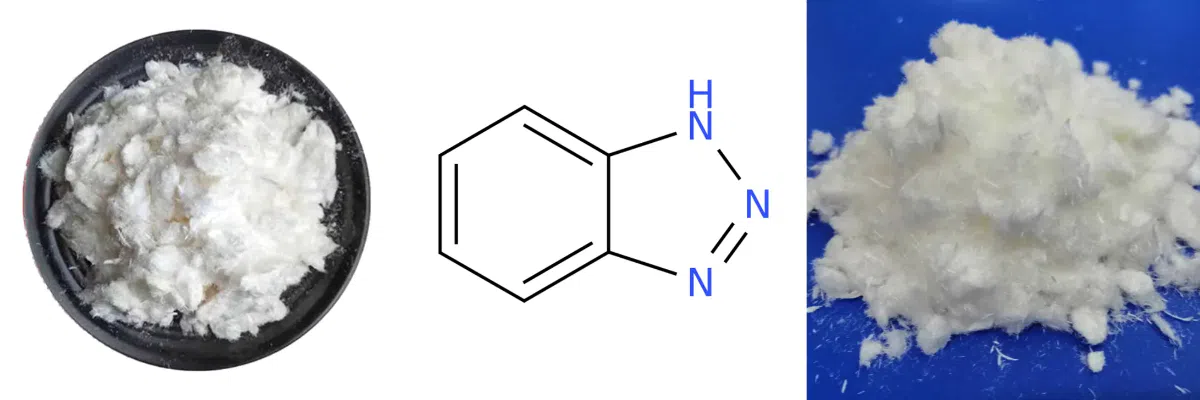
Benzisotriazole, CAS 95-14-7, is an aromatic nitrogen-containing heterocyclic compound also known as 1H-Benzotriazole or 1,2,3-Benzotriazole. It has the molecular formula C₆H₅N₃ and a molecular weight of approximately 119.12 g/mol. The molecule contains a fused benzene–triazole ring system, which contributes to its characteristic chemical behavior and its use in metal-protection applications.
Benzisotriazole is widely recognized for its role as a corrosion inhibitor, particularly for copper and certain other metals. Under suitable conditions, it can interact with metal surfaces and help form a protective layer that reduces attack from the surrounding environment. The effectiveness of this protection is not universal: it varies with the metal composition, solution chemistry, temperature, exposure conditions, and the presence of other formulation ingredients.
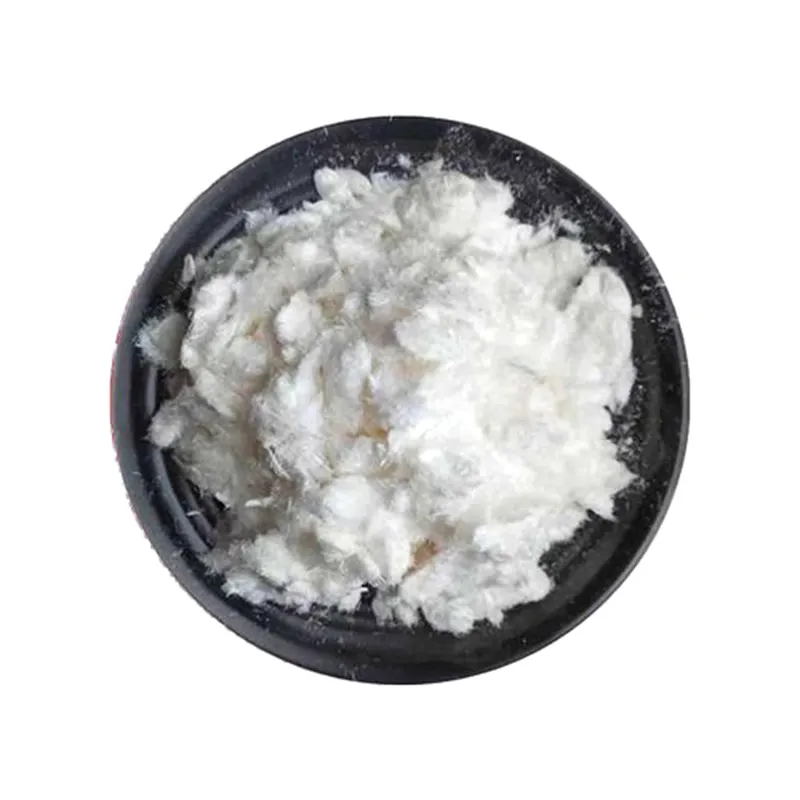
The compound is generally supplied as white to pale yellow or light tan crystals or powder. It has limited but measurable solubility in water, so the method of incorporation should be selected according to the required concentration and the overall formulation. Solvent selection, pH, temperature, and mixing conditions may affect dissolution and distribution. A small-scale compatibility assessment is advisable before introducing the material into a production system.
Industrial users may evaluate Benzisotriazole in metalworking processes, water-circulation systems, and other applications where metal tarnishing or corrosion needs to be controlled. The correct use level and operating conditions should be established through technical evaluation rather than assumed from the chemical identity alone.
When purchasing, verify the CAS number, assay, appearance, moisture content, impurity profile, particle form, and packaging. For corrosion-inhibition applications, buyers should also request relevant technical data and assess performance against the actual metal substrate and operating environment. Consult the current technical data sheet and safety data sheet for grade-specific handling, storage, and application guidance.
Chemical Properties
| Property | Details |
|---|---|
| Product Name | Benzisotriazole |
| CAS Number | 95-14-7 |
| Common Synonyms | Benzotriazole; 1H-Benzotriazole; 1,2,3-Benzotriazole |
| Molecular Formula | C₆H₅N₃ |
| Molecular Weight | Approximately 119.12 g/mol |
| IUPAC Name | 1H-1,2,3-Benzotriazole |
| Chemical Class | Nitrogen-containing aromatic heterocyclic compound |
| Appearance | Typically white to pale yellow or light tan crystalline solid or powder |
| Melting Point | Approximately 97–100°C; confirm using the applicable test method |
| Boiling Behavior | Reported values depend on pressure; consult reliable technical data for the relevant conditions |
| Water Solubility | Limited; reported values vary with temperature and measurement method |
| Functional Structure | Fused benzene and triazole ring system |
| Primary Industrial Function | Corrosion and tarnish inhibition in selected metal-protection systems |
| Storage Recommendation | Store in a tightly closed, compatible container under the conditions specified in the supplier's SDS; protect from moisture and unsuitable storage conditions |
Product Applications
1. Copper Corrosion Inhibition
Benzisotriazole is used in selected systems designed to reduce corrosion or tarnishing of copper surfaces. The protective effect depends on surface condition, solution composition, temperature, and exposure time.
2. Metalworking and Surface Treatment
It may be evaluated in metalworking fluids and surface-treatment formulations where protection of compatible metal components is required. Suitability should be determined through testing for corrosion performance, residue, and compatibility with other ingredients.
3. Industrial Water-Circulation Systems
Benzisotriazole can be used in certain industrial water systems to help protect susceptible metal components. System design, water chemistry, dosage, and environmental requirements must be considered before use.
4. Tarnish-Control Formulations
The compound may be incorporated into selected formulations intended to limit discoloration or surface deterioration of compatible metal items. Finished-product performance should be checked on the actual substrate under representative storage and use conditions.
5. Laboratory and Formulation Research
Benzisotriazole is suitable for research involving heterocyclic chemistry, metal-surface interactions, and corrosion-inhibition mechanisms. The required grade and analytical documentation depend on the purpose of the work.

FAQ
Q1: What is Benzisotriazole CAS 95-14-7?
Benzisotriazole is a nitrogen-containing aromatic heterocyclic compound with the molecular formula C₆H₅N₃. It is also commonly called 1H-Benzotriazole or 1,2,3-Benzotriazole.
Q2: What is the primary industrial use of Benzisotriazole?
Its principal industrial role is corrosion and tarnish inhibition, especially in selected applications involving copper and other compatible metals.
Q3: Is Benzisotriazole readily soluble in water?
No. Its water solubility is limited, and reported values vary with test conditions. Formulators should confirm the dissolution method and achievable concentration for their specific system.
Q4: What does Benzisotriazole look like?
It is commonly described as a white to pale yellow or light tan crystalline solid or powder. Actual appearance should be checked against the supplied grade specification.
Q5: Can Benzisotriazole be used in all metal-protection systems?
No. Performance varies with the metal, water chemistry, temperature, formulation ingredients, and operating conditions. Compatibility and corrosion tests are needed to determine suitability.
Q6: What should buyers check before purchasing?
Confirm CAS 95-14-7, assay, appearance, moisture, impurity limits, packaging, and available quality documents. For industrial applications, evaluate the product against the intended substrate and operating conditions before full-scale use.


