

Product Description
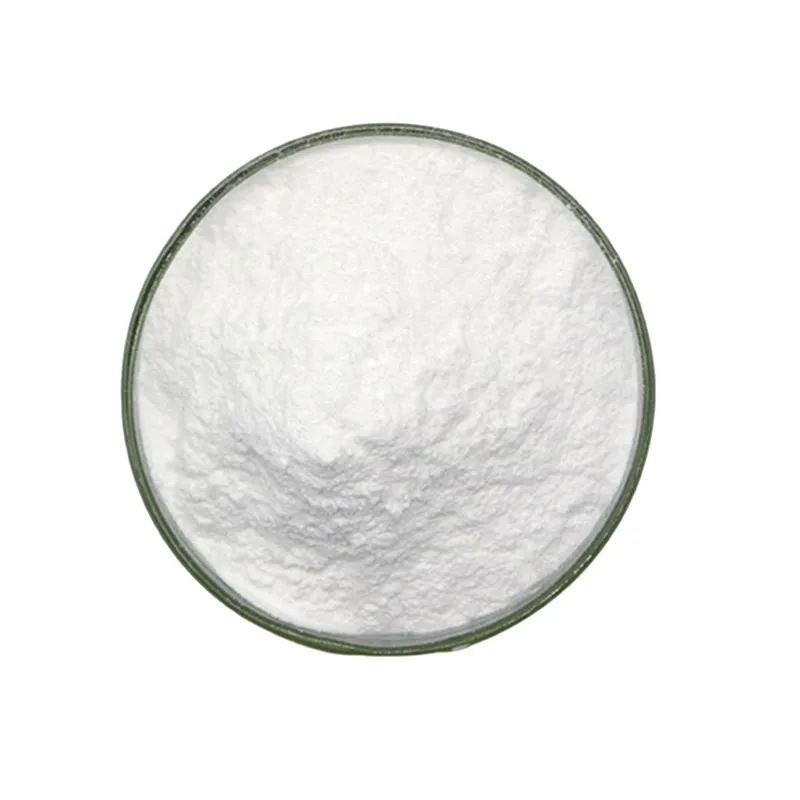
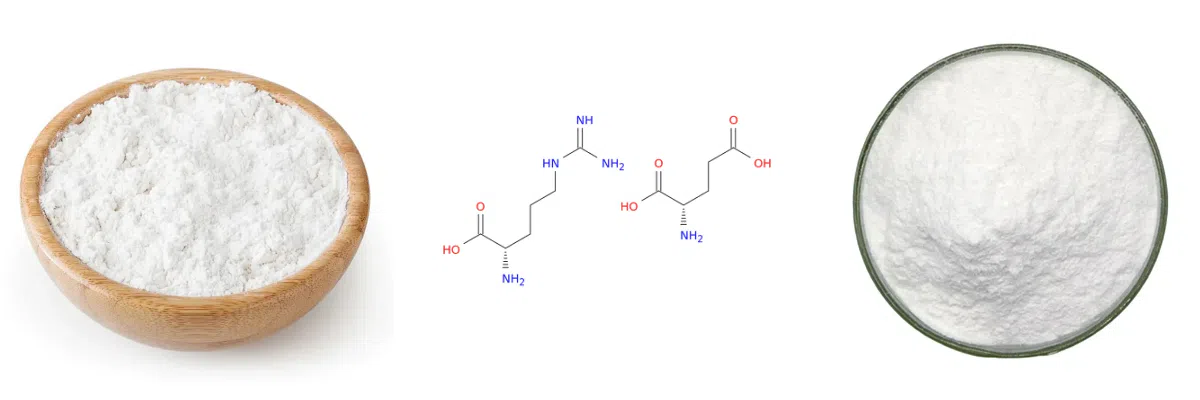
L-Arginine L-glutamate, identified by CAS 4320-30-3, is a compound comprising L-arginine and L-glutamic acid in a 1:1 ratio. It is commonly referred to as arginine glutamate. The compound has a molecular formula of C₁₁H₂₃N₅O₆ and a molecular weight of approximately 321.33 g/mol.
The two amino acid components contribute different chemical characteristics. L-arginine contains a guanidino group, while L-glutamic acid has two carboxyl groups and one amino group. Their combination gives the material distinctive acid–base properties that can be relevant to studies of amino acid systems and aqueous chemical environments. The compound should be distinguished from a covalently linked arginine–glutamate peptide, as the names are not necessarily interchangeable.
The material is generally described as a white to off-white solid. Reference data indicate limited solubility in water, with greater dissolution possible under acidic conditions. Actual behavior may depend on temperature, pH, concentration, and the physical form supplied. These factors should be assessed before selecting the compound for an analytical procedure or experimental formulation.
L-Arginine L-glutamate may be considered for biochemical research, amino acid interaction studies, and selected ingredient-development investigations. Its suitability for any specific application depends on the required grade, purity, handling conditions, and applicable regulatory requirements. Research findings should not be interpreted as evidence of clinical efficacy or suitability for a finished consumer product.
When evaluating this material, buyers should verify the CAS number, component ratio, assay, moisture content, appearance, and any relevant impurity specifications. If a defined hydrate or other solid form is required, that detail should be confirmed separately in the product specification rather than assumed from the molecular formula alone.
Chemical Properties
| Property | Details |
|---|---|
| Product Name | L-Arginine L-glutamate |
| CAS Number | 4320-30-3 |
| Common Name | Arginine Glutamate |
| Composition | L-Arginine and L-glutamic acid, 1:1 |
| Molecular Formula | C₁₁H₂₃N₅O₆ |
| Component Formula | C₆H₁₄N₄O₂ · C₅H₉NO₄ |
| Molecular Weight | Approximately 321.33 g/mol |
| IUPAC Description | L-arginine compound with L-glutamic acid (1:1) |
| InChIKey | RVEWUBJVAHOGKA-WOYAITHZSA-N |
| Chemical Category | Amino acid compound |
| Physical Form | Solid |
| Appearance | Typically white to off-white |
| Odor | Generally described as odorless |
| Water Solubility | Slightly soluble; dissolution may improve in acidic aqueous media |
| Thermal Behavior | Reported to decompose on heating above approximately 185°C; results depend on test conditions |
| Key Functional Groups | Guanidino, amino, and carboxyl groups |
| Storage | Follow the grade-specific supplier instructions; use suitable packaging and avoid unverified storage conditions |
Product Applications
1. Biochemical Research
L-Arginine L-glutamate can be used in laboratory investigations involving amino acid chemistry, biochemical systems, and the behavior of combined amino acid components.
2. Amino Acid Interaction Studies
Its defined composition makes it relevant to comparative studies of arginine and glutamate in solution, including investigations of pH-dependent behavior and interactions with other research materials.
3. Analytical Method Development
The compound may be evaluated as a reference material in analytical method development, identity testing, or comparative measurements when its purity and suitability for the chosen method have been confirmed.
4. Ingredient Evaluation and Formulation Research
Researchers may assess the compound in experimental ingredient systems where amino acid composition and solution behavior are relevant. Compatibility, stability, and dissolution should be established under the actual formulation conditions.
5. Cosmetic Ingredient Research
Arginine glutamate may be considered for research into amino acid-containing cosmetic ingredients and conditioning systems. Its suitability for a finished cosmetic product must be established through formulation, safety, and regulatory assessments.

FAQ
Q1: What is L-Arginine L-glutamate?
It is a compound comprising L-arginine and L-glutamic acid in a 1:1 ratio. Its CAS number is 4320-30-3.
Q2: What are its molecular formula and molecular weight?
The molecular formula is C₁₁H₂₃N₅O₆, and the molecular weight is approximately 321.33 g/mol.
Q3: Is L-Arginine L-glutamate the same as L-arginine?
No. L-arginine is one component of the compound. L-Arginine L-glutamate contains both L-arginine and L-glutamic acid in a defined ratio.
Q4: Is it an arginine–glutamate dipeptide?
The names should not be treated as interchangeable. CAS 4320-30-3 identifies the 1:1 compound of L-arginine and L-glutamic acid; it should not automatically be described as a covalently linked peptide.
Q5: How soluble is L-Arginine L-glutamate in water?
Reference data describe its water solubility as limited. Dissolution may vary with pH, temperature, concentration, and material form, so testing under the intended conditions is recommended.
Q6: What should be checked when sourcing this material?
Confirm CAS 4320-30-3, the 1:1 composition, assay, moisture content, appearance, and relevant impurity limits. Also confirm the physical form and any special grade requirements for the intended application.


