

Product Description
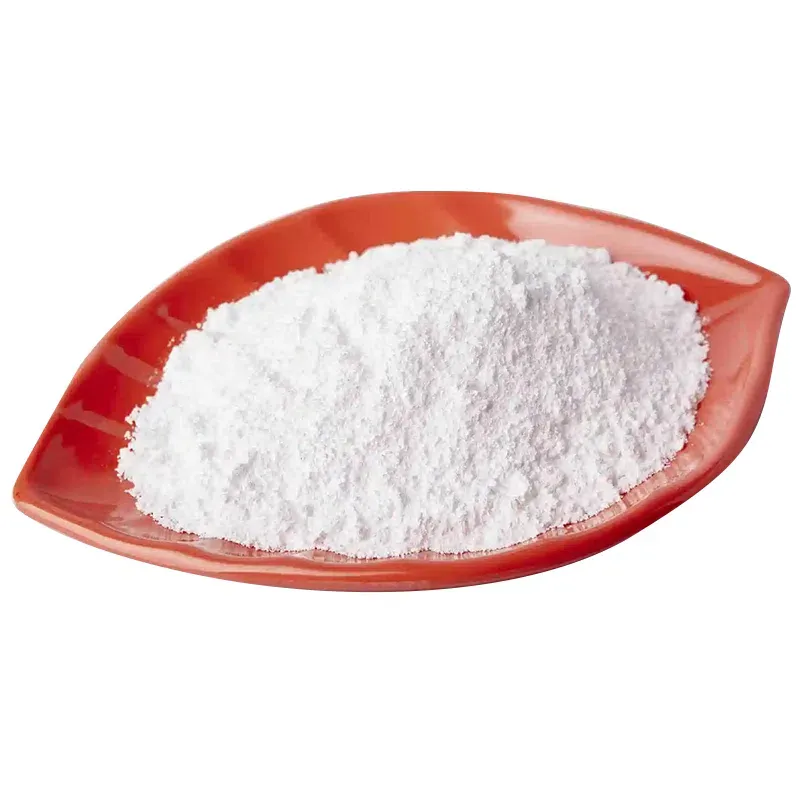
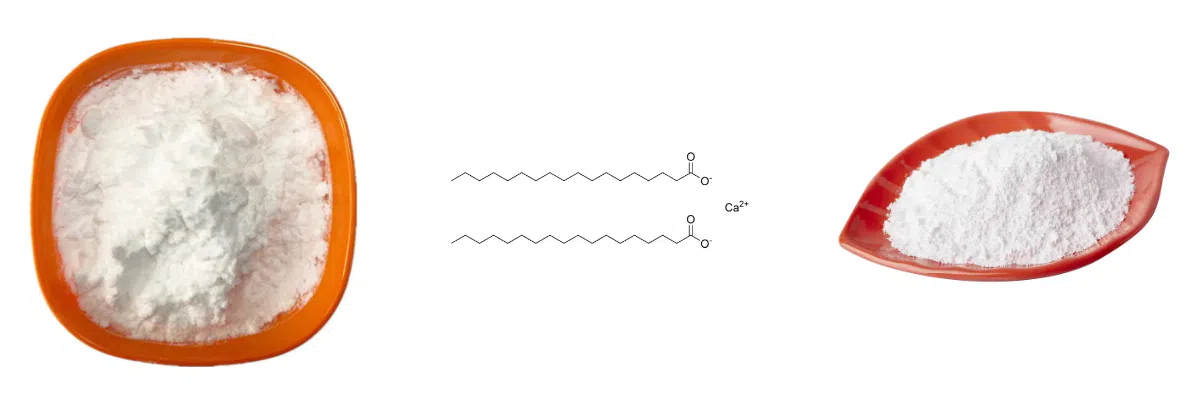
Calcium stearate is the calcium salt of stearic acid, commonly represented by the formula C₃₆H₇₀CaO₄. Identified by CAS 1592-23-0, it is a hydrophobic metallic soap supplied commercially as a white to off-white powder. Its long-chain fatty-acid groups give it water-repellent characteristics, while its calcium content and physical properties make it useful in a range of industrial formulations.
Unlike water-soluble stearate salts, calcium stearate has very low solubility in water. It is therefore commonly incorporated as a dispersed solid rather than applied as a true aqueous solution. Depending on the formulation, it can contribute lubrication, mold release, powder flow, anti-caking behavior, or water repellency. Performance depends on particle size, dispersion quality, dosage, and the other ingredients present.
In polymer processing, calcium stearate may be used as a lubricant or processing aid. Rubber compounds, construction materials, coatings, and selected dry mixtures may also use it where its release or hydrophobic properties are beneficial. Food-related use is a separate, specification-sensitive application: only a grade meeting the applicable purity requirements and local regulations should be considered for that purpose.
For procurement, confirm the intended application before selecting a grade. Important purchasing parameters can include calcium assay, free fatty acid, moisture or loss on drying, ash, particle-size distribution, and limits for relevant impurities. For food or other regulated applications, request the applicable compliance documentation in addition to the Certificate of Analysis (COA), Technical Data Sheet (TDS), and Safety Data Sheet (SDS).
Calcium stearate should not be confused with magnesium stearate, zinc stearate, or stearic acid. These materials have different compositions and may behave differently in a formulation. Use the CAS number and the supplier's grade specification to confirm product identity before production-scale use.
Chemical Properties
| Property | Details |
|---|---|
| Product Name | Calcium Stearate |
| CAS Number | 1592-23-0 |
| EC Number | 216-472-8 |
| Molecular Formula | C₃₆H₇₀CaO₄ |
| Molecular Weight | Approximately 607.02–607.03 g/mol |
| IUPAC Name | Calcium dioctadecanoate |
| Other Chemical Names | Calcium distearate; calcium octadecanoate; octadecanoic acid, calcium salt |
| Chemical Class | Organic calcium salt; metallic stearate |
| Appearance | Typically a white to off-white powder |
| Odor | Generally slight or nearly odorless; confirm against the supplied grade |
| Water Solubility | Practically insoluble in water |
| Functional Characteristics | Hydrophobic, lubricating, release-promoting; may assist powder flow in suitable systems |
| Calcium Content | Grade-dependent; verify by COA |
| Free Fatty Acid | Specification-dependent |
| Moisture / Loss on Drying | Specification-dependent |
| Particle Size | Grade-dependent |
| Storage | Keep in a tightly closed, clearly labelled container in a dry, well-ventilated area; follow the current SDS |
Values such as appearance, assay, moisture, free fatty acid, and particle size can vary by grade and test method. The supplier's current specification and COA should be used for purchasing and quality acceptance.
Product Applications
1. Plastics and Polymer Processing
Calcium stearate is used in selected polymer formulations as a lubricant, release aid, or processing additive. The suitable dosage depends on the polymer, processing temperature, and compatibility with other additives.
2. Rubber Compounding
In rubber processing, it may assist lubrication or release in compatible compound and mold systems. Formulation trials are recommended to assess dispersion and its effect on the finished product.
3. Construction Materials
Certain cement-based, gypsum-based, and other dry construction formulations use calcium stearate for water-repellent properties. Performance depends on the substrate, incorporation method, and target water-resistance requirements.
4. Coatings and Surface-Related Formulations
Selected coatings and formulated materials may use calcium stearate to modify surface behavior or provide lubrication. Compatibility and dispersion should be checked before commercial-scale use.
5. Powder Processing and Anti-Caking Formulations
Where permitted by the formulation, calcium stearate can serve as a processing aid to support flow or reduce sticking. Its effectiveness depends on powder characteristics and the intended process.
6. Food-Related Applications
Certain calcium stearate grades may be used for specific food-related functions where authorized. Do not assume that industrial-grade material is suitable for food use; verify the applicable food-grade specification, documentation, and regulations in the destination market.

FAQ
Q1: What is the CAS number of calcium stearate?
A: Its CAS number is 1592-23-0. The commonly listed molecular formula is C₃₆H₇₀CaO₄, with a molecular weight of approximately 607.03 g/mol.
Q2: Is calcium stearate soluble in water?
A: No. Calcium stearate is practically insoluble in water. It is generally incorporated as a solid additive, with dispersion and performance depending on the formulation.
Q3: What is calcium stearate used for?
A: Common industrial uses include lubrication and release assistance in plastics and rubber processing, water repellency in selected construction materials, and flow or anti-caking support in compatible formulations.
Q4: Is every calcium stearate grade suitable for food applications?
A: No. Food-related use depends on the product's grade, purity specification, supporting documentation, and applicable regulations. Confirm these requirements before purchase or use.
Q5: Which quality parameters should be checked before ordering?
A: Review the intended-use requirements and confirm calcium content, free fatty acid, moisture or loss on drying, particle size where relevant, and impurity limits. For regulated applications, also request the applicable compliance documents and current COA, TDS, and SDS.


