

Product Description
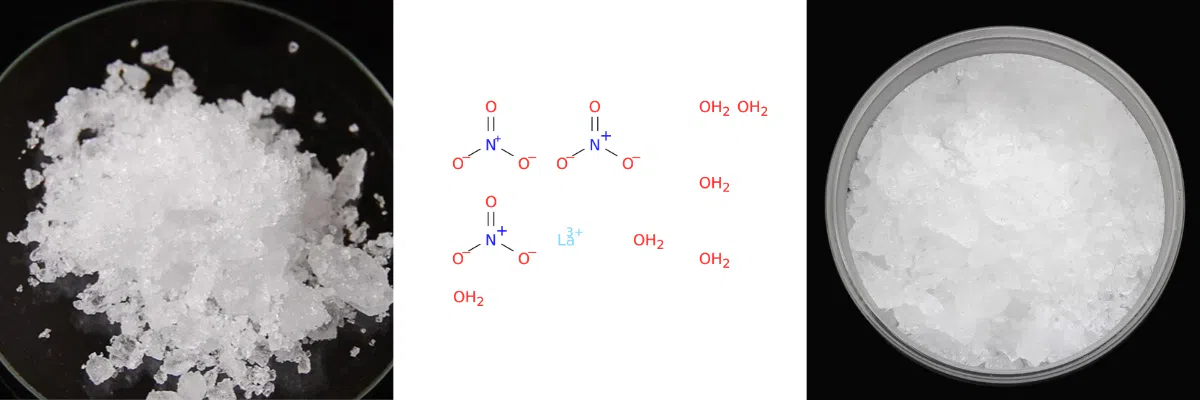
Lanthanum nitrate hexahydrate is an inorganic rare-earth salt with the chemical formula La(NO₃)₃·6H₂O and CAS number 10277-43-7. It consists of lanthanum(III) ions, nitrate ions, and six molecules of water of crystallization. Its molecular weight is approximately 433.01 g/mol, making the hydration state an important factor in reagent calculations and precursor formulation.
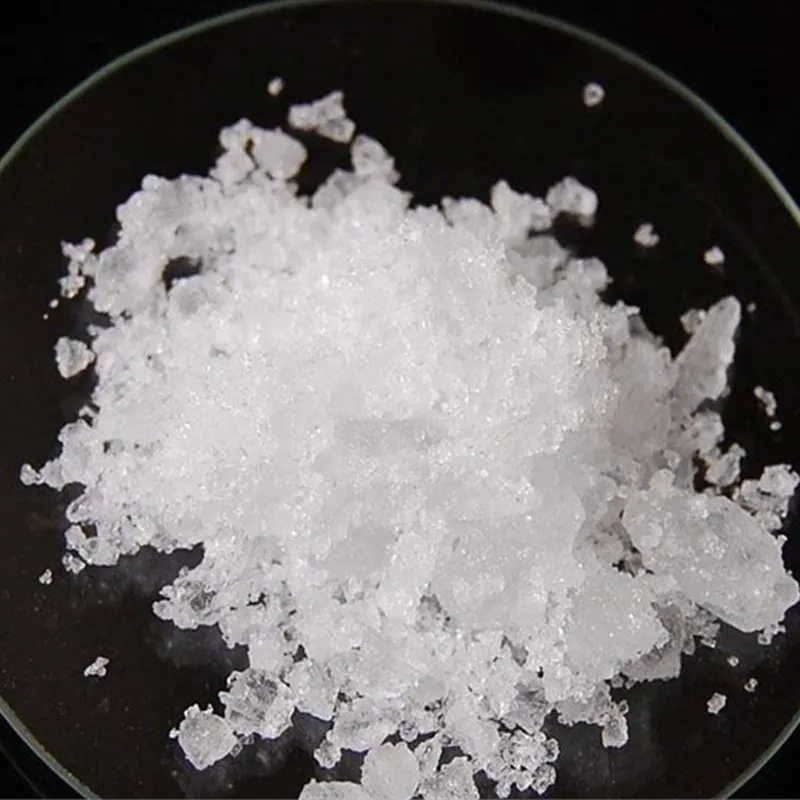
The material is typically supplied as a white to light-yellow crystalline solid. It is highly soluble in water and hygroscopic, so exposure to humid air can affect its physical condition and handling characteristics. Maintaining appropriate packaging and storage conditions helps preserve the material's specified quality.
In chemical manufacturing, lanthanum nitrate hexahydrate can serve as a soluble lanthanum source for preparing other lanthanum compounds and selected lanthanum-containing materials. It is also used in certain electroplating and material-processing applications. The appropriate grade depends on the target composition, process chemistry, and allowable impurity levels.
This compound should not be confused with anhydrous lanthanum nitrate or other lanthanum salts. Different hydration states and counterions affect molecular weight, composition, and processing behavior. When calculating batch quantities, use the molecular weight and assay stated for the actual supplied grade.
For procurement, specify CAS 10277-43-7 and the hexahydrate form. Review the Certificate of Analysis (COA) for assay, rare-earth content, and relevant trace impurities; request the Technical Data Sheet (TDS) and Safety Data Sheet (SDS) for physical properties, compatibility, packaging, and handling requirements.
Lanthanum nitrate hexahydrate is an oxidizing salt. Keep it away from combustible materials and incompatible reducing agents, avoid unnecessary dust generation, and follow the current SDS for personal protective equipment, storage, spill response, and disposal.
Chemical Properties
| Property | Details |
|---|---|
| Product Name | Lanthanum Nitrate Hexahydrate |
| CAS Number | 10277-43-7 |
| EC Number | 233-238-0 |
| Molecular Formula | La(NO₃)₃·6H₂O |
| Alternative Formula Representation | H₁₂LaN₃O₁₅ |
| Molecular Weight | 433.01 g/mol |
| IUPAC Name | Lanthanum(III) nitrate hexahydrate |
| Chemical Class | Inorganic rare-earth nitrate salt |
| Lanthanum Oxidation State | +3 |
| Hydration State | Hexahydrate; 6 H₂O per formula unit |
| Appearance | Typically white to light-yellow crystalline solid |
| Water Solubility | Highly soluble in water |
| Hygroscopicity | Hygroscopic; protect from excessive moisture |
| Melting Point | Reported values vary by source and test conditions; confirm against the supplier's specification |
| Purity / Assay | Grade-specific; verify using the COA |
| Key Quality Parameters | Lanthanum or rare-earth content, assay, and trace-metal impurities |
| Storage | Keep in a tightly closed, properly labelled container in accordance with the current SDS; segregate from combustible and incompatible materials |
Physical properties and impurity limits may vary by grade and reference method. Use the supplier's current TDS, COA, and SDS as the controlling documents for the material being purchased.
Product Applications
1. Lanthanum Compound Manufacturing
Lanthanum nitrate hexahydrate can be used as a starting material in the preparation of other lanthanum compounds. The synthesis route and required purity depend on the target product and downstream process.
2. Functional Material and Precursor Synthesis
It can provide a soluble lanthanum source for preparing selected lanthanum-containing oxides, ceramics, and other functional materials. Precipitation, drying, and thermal treatment conditions must be designed for the target composition.
3. Electroplating and Surface Treatment
The compound is reported for use in certain electroplating processes. Its suitability depends on bath chemistry, operating conditions, and the specific surface-treatment requirements.
4. Ceramic and Advanced Material Research
Research and development teams may evaluate lanthanum nitrate as a precursor for lanthanum-containing ceramic or oxide systems. Purity and trace-metal limits are particularly important when small impurity levels can influence material performance.
5. Laboratory and Analytical Preparation
Suitable reagent grades can be used in laboratory solution preparation, synthesis experiments, and analytical investigations requiring a defined source of lanthanum(III). The selected grade should meet the method's purity requirements.

FAQ
Q1: What is the CAS number of lanthanum nitrate hexahydrate?
A: The CAS number is 10277-43-7. Its chemical formula is La(NO₃)₃·6H₂O, and its molecular weight is approximately 433.01 g/mol.
Q2: What is the difference between lanthanum nitrate and lanthanum nitrate hexahydrate?
A: The name lanthanum nitrate does not always specify the hydration state. The hexahydrate contains six water molecules per formula unit, which affects its molecular weight and the amount needed for a particular formulation.
Q3: Is lanthanum nitrate hexahydrate soluble in water?
A: Yes. It is highly soluble in water and can be used to prepare aqueous lanthanum-containing solutions. Confirm the required concentration and compatibility for the intended process.
Q4: What is lanthanum nitrate hexahydrate used for?
A: Its uses include the preparation of other lanthanum compounds, selected material-synthesis processes, certain electroplating applications, and laboratory research. Suitability depends on the product grade and process requirements.
Q5: How should lanthanum nitrate hexahydrate be stored and handled?
A: Follow the current SDS. Because it is hygroscopic and an oxidizing salt, keep it properly sealed, protect it from moisture, and segregate it from combustible materials and incompatible reducing agents.


