

Product Description
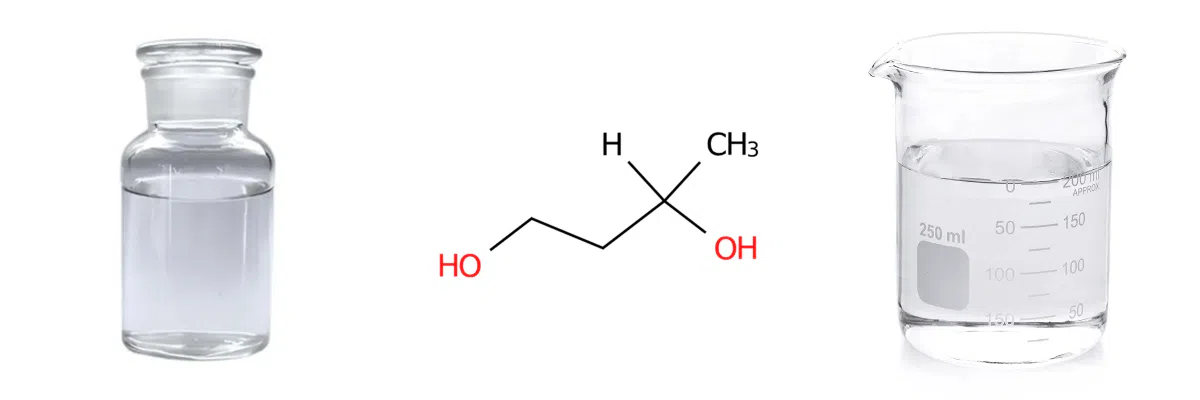
1,3-Butanediol (CAS 107-88-0), also known as butane-1,3-diol or 1,3-butylene glycol, is an organic diol with the molecular formula C₄H₁₀O₂. It is generally supplied as a colorless liquid and contains two hydroxyl groups attached at the first and third positions of a four-carbon chain.
Its combination of hydroxyl functionality and water compatibility makes it suitable for several formulation and chemical-processing roles. Depending on the application and grade, 1,3-butanediol may be used as a solvent for selected ingredients, a humectant, or a raw material in the preparation of certain polyester and polyurethane materials.
This compound should not be confused with other butanediol isomers, which have different hydroxyl-group positions and chemical properties. When sourcing the material, confirm the CAS number, assay, water content, impurity limits, and whether the specification is intended for industrial, cosmetic, laboratory, or regulated applications. For pharmaceutical-related use, suitability must be established from the supplied quality documentation and applicable requirements.
Chemical Properties
| Property | Details |
|---|---|
| Product Name | 1,3-Butanediol |
| CAS Number | 107-88-0 |
| Molecular Formula | C₄H₁₀O₂ |
| Molecular Weight | 90.12 g/mol |
| IUPAC Name | Butane-1,3-diol |
| Synonyms | 1,3-Butylene Glycol; 1,3-Dihydroxybutane; Methyltrimethylene Glycol |
| Chemical Category | Organic Diol; Alcohol |
| Appearance | Typically a clear, colorless liquid |
| Functional Groups | Two hydroxyl groups |
| Water Compatibility | Miscible with water |
| Boiling Point | Approximately 207°C at atmospheric pressure |
| Storage | Keep in a tightly closed container in a cool, dry, well-ventilated area, following the product-specific SDS and label instructions |
Product Applications
1. Solvent for Formulation Ingredients
Used as a solvent for selected flavoring and other formulation ingredients where its compatibility and regulatory status are appropriate for the intended use.
2. Humectant Applications
May be incorporated into suitable formulations to help retain moisture. The required concentration and performance should be assessed for the specific formulation and grade.
3. Polyester and Polyurethane Material Production
Can serve as a chemical building block or co-monomer in selected polymer and resin manufacturing processes, depending on the reaction design and required material properties.
4. Specialty Chemical Synthesis
Its two hydroxyl groups provide reactive sites for selected synthesis and modification processes where a defined diol structure is required.
5. Laboratory and Formulation Research
Used in research involving diol chemistry, solvent behavior, and the development of formulations containing 1,3-butanediol.
FAQ
Q1: What is the CAS number of 1,3-butanediol?
A: Its CAS number is 107-88-0.
Q2: What are the molecular formula and molecular weight?
A: The molecular formula is C₄H₁₀O₂, and the molecular weight is approximately 90.12 g/mol.
Q3: Is 1,3-butanediol the same as 1,2-butanediol or 1,4-butanediol?
A: No. These are structural isomers with different hydroxyl-group positions. CAS 107-88-0 specifically identifies 1,3-butanediol.
Q4: Is 1,3-butanediol miscible with water?
A: Yes. It is miscible with water, which supports its use in suitable aqueous formulations and processing applications.
Q5: What industries may use 1,3-butanediol?
A: Potential applications include specialty formulations, chemical synthesis, and selected polymer or resin production. The appropriate grade depends on the intended process.
Q6: What should be confirmed before purchasing?
A: Confirm the CAS number, assay, water content, impurity limits, intended application, and packaging requirements. Request the current technical data sheet, batch-specific certificate of analysis, and safety data sheet. For regulated applications, verify grade suitability and applicable market requirements.


